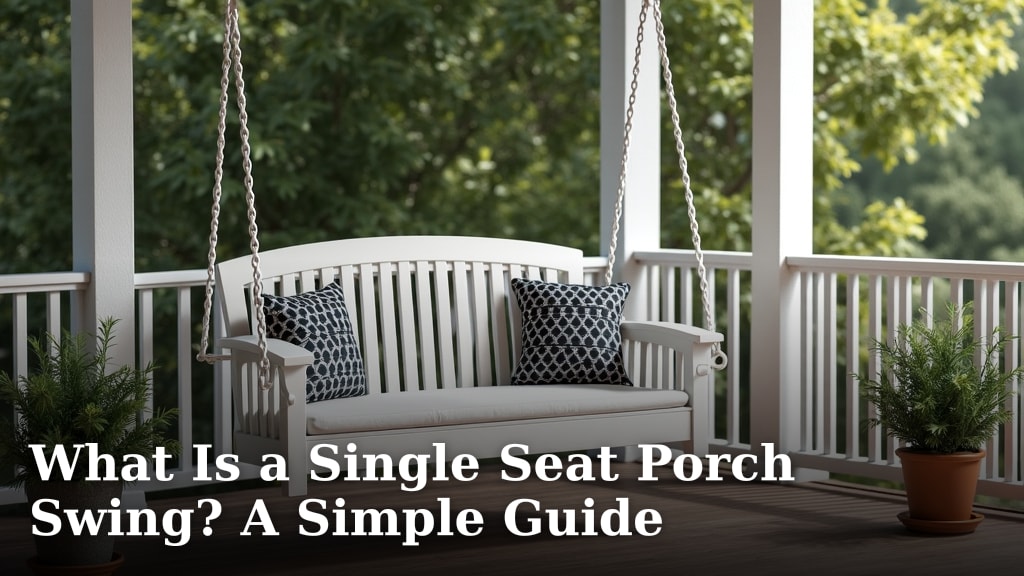
What Is a Single Seat Porch Swing? A Simple Guide
A single seat porch swing is a small, cozy swing designed to hang from a porch ceiling or frame, sized perfectly for one person. It’s a space-saving version of the classic porch swing, offering a private spot to relax without taking up much room.
Many people choose a single seat porch swing for small porches, balconies, or even a sturdy tree branch. We found it’s a popular choice for creating a quiet reading nook or a peaceful corner to enjoy a morning coffee alone.
- A single seat porch swing is a compact, one-person version of a traditional porch swing.
- It is ideal for small spaces like balconies, patios, or cozy porches.
- You’ll find them made from materials like wood, metal, or all-weather wicker.
- Most models require a sturdy overhead beam or frame for safe hanging.
- They provide a personal retreat for relaxing, reading, or enjoying the outdoors.
Below, we’ll walk through the different materials, sizes, and key features to look for when choosing the perfect single seat porch swing for your home.
Why a Single Seat Porch Swing Might Be Your Perfect Match
A single-seat porch swing isn’t just a smaller version of a big porch swing. It’s a smart piece of furniture made for a specific purpose: giving one person a dedicated, comfortable space to relax. It functions like a personal retreat, hanging right outside your door. You might use it for reading, enjoying your garden, or simply having a quiet cup of coffee without interruption. We found that its growing popularity comes from its ability to turn even a tiny outdoor area into a functional, peaceful spot.
Think about it. A large, multi-person swing demands space and structural support. A single-seat model asks for much less. This makes it a flexible choice for modern homes, apartments, and older houses with limited porch space. The key benefit is **personal comfort** in a compact form.
Exploring Common Materials: Wood, Metal, and Wicker
The material your swing is made from determines its look, durability, and how much care it needs. Each has a distinct personality. You’ll want to match the material to your climate, style, and how much maintenance you’re willing to do.
Wooden Swings: Classic and Timeless
Wood offers a warm, traditional look that blends naturally with most porch settings. Cedar, teak, and pine are popular choices. Cedar and teak are naturally resistant to rot and insects, making them excellent for outdoor use (according to general forestry guidelines). Pine is often more affordable but may require more sealing or painting to withstand the elements. The trade-off is clear: natural beauty and strength versus regular upkeep.
Sealing and Staining Your Wooden Swing
To protect wood, you should apply a high-quality outdoor sealant or stain. This helps prevent moisture damage, warping, and UV fading. Plan to re-treat it every one to two years, depending on your weather exposure. It’s a bit like applying sunscreen to protect your skin—consistent care keeps it looking good longer.
Metal Swings: Sleek and Strong
Metal swings, often made from wrought iron, aluminum, or steel, bring a different vibe. They can feel more modern or elegantly rustic. Aluminum is lightweight and won’t rust, making it a low-friend for coastal areas. Steel and iron are heavier and very sturdy but need a powder-coated or painted finish to prevent rust. A chipped finish on steel can let moisture in, so you’ll want to touch up scratches promptly.
All-Weather Wicker: The Best of Both Worlds
Modern “wicker” swings are usually made from synthetic materials like resin or HDPE woven over a metal frame. We found this material has become incredibly popular because it offers the charming look of traditional wicker with fantastic durability. It resists rain, sun, and temperature swings without cracking, fading, or rotting. It’s lightweight, easy to clean, and often comes with plush, weather-resistant cushions.
Sizing and Dimensions: Will It Fit Your Space?
Before you fall in love with a design, measure your space. A swing that looks perfect online might feel cramped on your small porch. You need to account for the swing itself and the room it needs to swing back and forth.
Here’s a general guide to typical dimensions:
- Width: Usually between 26 and 32 inches. This provides ample room for one adult without feeling wide.
- Depth: Often 18 to 24 inches. This affects legroom and seating posture.
- Hanging Height: The seat should typically hang 17-19 inches off the ground for comfortable sitting. You also need at least 12-18 inches of clearance in front and behind the swing for movement.
Key Features to Look For
Beyond material and size, certain features make a big difference in comfort and usability. Pay attention to these details when shopping.
Comfort and Cushions
The swing’s frame is just the start. The seat itself matters. A contoured or ergonomic design offers more support than a flat board. Cushions should be thick (at least 3 inches) and covered in outdoor-grade fabric like Sunbrella, which resists mildew and fading. Look for ties to keep cushions in place on breezy days.
Weight Capacity
This is a critical safety specification. Most single-seat swings are rated to hold between 250 and 400 pounds. Always check the manufacturer’s listed capacity and ensure it comfortably supports the intended user. It’s a non-negotiable number for a safe installation.
Hanging Hardware and Chains
The swing is only as secure as its hanging system. Look for heavy-duty chains or rope and sturdy mounting hooks. The hardware included should be rated for outdoor use and the swing’s maximum load. Some swings come with tree straps, but for a permanent porch installation, you’ll need appropriate ceiling hooks and a solid overhead beam.
Installation: Hanging It Safely and Securely
Proper installation is about safety and enjoyment. A poorly hung swing will feel unstable and could be dangerous. The most important factor is the support structure.
Finding the Right Support
You need a solid overhead beam, a ceiling joist, or a dedicated swing frame. Porch ceilings are often just decorative soffits and cannot support weight. Probe with a stud finder to locate the real structural joists. If you can’t find adequate support in your porch ceiling, a freestanding A-frame structure designed for porch swings is a safe alternative. Many experts say that **consulting a contractor** if you’re unsure is a wise investment in safety.
Chains vs. Rope: What’s the Difference?
Both work, but they offer different experiences. Chains are durable, low-maintenance, and provide a classic look. They can clink, which some find peaceful and others find annoying. Rope (often polyester or nylon) offers a quieter, softer swing motion. It can stretch slightly over time, so you may need to adjust the knots eventually.
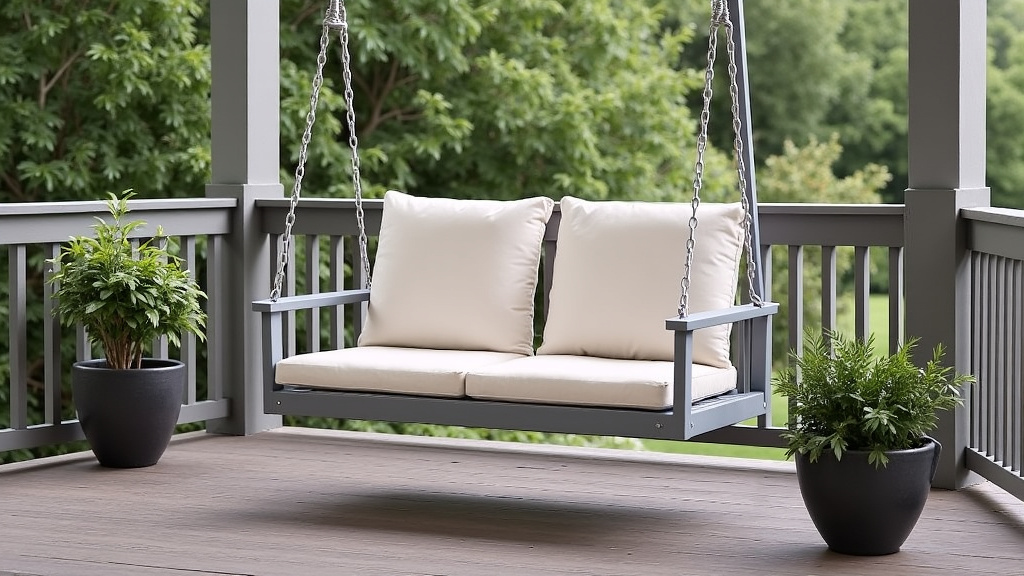
Comparison: Materials at a Glance
To help you decide, here’s a simple comparison table of the most common materials:
| Material | Best For | Pros | Cons |
|---|---|---|---|
| Cedar/Teak Wood | Traditional aesthetics, durability | Naturally resistant to decay, ages beautifully | Requires periodic sealing, higher cost |
| Pine Wood | Budget-friendly, painted finishes | Affordable, easy to paint any color | Needs regular maintenance to prevent rot |
| Powder-Coated Steel | Sturdy, modern or rustic look | Very strong, holds weight well | Can rust if finish is damaged, heavier |
| Aluminum | Coastal areas, lightweight needs | Lightweight, completely rust-proof | Can feel less solid, may dent |
| Synthetic Wicker (Resin) | Low maintenance, all-weather use | Easy to clean, won’t rot or fade | Can look less natural, varies in quality |
Maintenance: Keeping Your Swing in Good Shape
Proper care extends the life of your swing. The effort depends on the material you choose.
- For Wood: Clean with a mild soap and water solution. Inspect annually for signs of wear in the finish. Sand and reapply sealant or stain as needed to maintain protection.
- For Metal: Wipe down with a damp cloth to remove dust and dirt. Check periodically for any chips in the paint or powder coating. Touch up chips with exterior metal paint to prevent rust.
- For Wicker: This is the easiest. Hose it down or wipe with soapy water. For stubborn dirt, a soft brush can help. Cushions should be stored indoors or in a deck box during harsh winter months.
Creating Your Personal Retreat
Ultimately, a single-seat porch swing is about carving out a small slice of peace for yourself. It’s a promise of quiet mornings and slow evenings. Pair it with a small side table for your drink and a good reading light, and you’ve created a complete outdoor living room for one. The gentle motion can be soothing, helping to reduce stress after a long day. It’s a simple luxury that’s surprisingly accessible.
Your Final Checklist Before Buying
Use this quick list to make sure you’ve covered all your bases:
- Measure twice: Confirm the swing’s dimensions fit your porch, balcony, or patio with room to move.
- Check the capacity: Ensure the weight limit comfortably exceeds the intended user’s weight.
- Inspect the materials: Choose wood, metal, or wicker based on your climate and maintenance preference.
- Review the hardware: Confirm heavy-duty hanging hardware is included and rated properly.
- Verify the support: Locate a secure overhead beam or plan for a sturdy freestanding frame.
- Consider comfort: Look for ergonomic design and weather-resistant cushions for ultimate relaxation.
Conclusion
A single seat porch swing is a smart, personal retreat designed for your comfort in a compact space. We’ve seen how material choices like wood, metal, or wicker affect durability and style. You’ve learned that proper measurement, support, and hanging hardware are non-negotiable for safety. The key takeaway is this: it’s not just about buying a swing, but about creating your own quiet corner. Your next step is simple. Use the checklist from this guide to measure your space and confirm your porch can support a swing. Then, you can confidently choose the model that turns a small corner into your favorite spot.
Frequently Asked Questions
How much weight can a single seat porch swing typically hold?
Most single seat porch swings are designed to support between 250 and 400 pounds. This weight capacity is clearly listed by the manufacturer for safety. Always check this specification and choose a swing that exceeds the intended user’s weight for secure, worry-free use.
Can I hang a single seat swing from a tree branch instead of a porch?
Yes, a sturdy, live tree branch can be suitable for hanging your swing. You must ensure the branch is healthy, thick enough (often at least 6 inches in diameter), and positioned at a safe height. Use appropriate tree straps or anchors to avoid damaging the bark and secure the swing properly.
What is the best material for a porch swing in a very humid or rainy climate?
For humid or rainy areas, all-weather synthetic wicker or powder-coated aluminum are excellent low-maintenance choices. They are inherently resistant to moisture, rust, and rot. Cedar and teak woods are also naturally durable, but they will require periodic sealing to maintain their performance in high humidity.
Do single seat porch swings come with cushions, or do I buy them separately?
It varies by model. Some swings include a basic cushion, while others are sold as just the frame. We recommend buying a thick, weather-resistant cushion separately if one isn’t included. Look for outdoor-grade fabric and ties to keep it securely in place.
How difficult is it to install a single seat porch swing?
Installation difficulty depends entirely on your overhead support. If you have a solid, accessible porch joist, hanging the swing with proper hardware is a manageable DIY project. If you need to install new support or use a freestanding frame, it may require more skill or a contractor’s help.