How to Build a Wooden Deck Box
To build a wooden deck box, measure your patio essentials, choose pressure-treated lumber, and build a sealed lid with hinges and a latch. If you want storage without a build, compare resin deck boxes below.
On this page (11 sections)
- What size should wooden deck box plans aim for?
- Which lumber and hardware do wooden deck box plans need?
- How do you build the box frame and walls?
- How do you make the lid close tight and stay weather resistant?
- Can a wooden deck box double as a bench?
- What finish and care do wooden deck boxes need?
- When is a resin deck box smarter than a wood build?
- How do wooden deck box plans compare to ready-made wood boxes?
- What mistakes should you avoid with deck box plans?
- What if you want porch swing storage too?
- Which path fits your patio best?
To build a wooden deck box, measure your patio essentials, choose pressure-treated lumber, and build a sealed lid with hinges and a latch. These wooden deck box plans cover sizing, materials, assembly, and care, with resin options to compare if a build is not right for you.
What size should wooden deck box plans aim for?
Start with your longest item, then add 2 inches at each end for easy loading. Cushions that fold lengthwise often drive length, while pool toys and tools drive height.
Measure the stack as you will store it, not as it sits on a chair. Add 2 to 3 inches above the stack for the lid frame and any divider.
A box about 48 to 60 inches long suits most patios. This matches ready-made sizes, since the LIFETIME 60012 Extra Large Deck Box measures 5 ft.
L x 2 ft. W x 2 ft.
2.5 in. H, with inside dimensions of 57 inches long by 20.75 inches wide by 23.75 inches high.
Check door swing and walkway space before you finalize size. A lid that opens past 90 degrees needs clear room, and a bench-style box needs space for people to sit.
Our full deck box guide covers sizing, locks, and seating use in more detail. Use it to test whether a wood build or a resin box fits your deck better.
Which lumber and hardware do wooden deck box plans need?
Pressure-treated pine is the usual pick for outdoor boxes. It resists moisture and insects better than untreated pine and takes paint and stain well once dry.
Cedar and redwood look good unfinished, but they cost more and still need sealing. Plan to seal any wood at least once a year.
For the build, list 1x6 or 2x4 boards for walls, plywood or outdoor boards for the floor, and a lid frame. Add exterior screws, outdoor hinges, a latch or lock hasp, and a lid support.
Use galvanized or stainless hardware to avoid rust stains. Pre-drill near board ends and leave gaps between floor boards for drainage.
If you plan to sit on the lid, add a center support and a reinforced frame so it does not sag.
How do you build the box frame and walls?
Cut the front, back, and side boards to length, then assemble a rectangular frame first. A flat, square frame helps the walls sit straight and the lid close evenly.
Attach wall boards with 2-inch exterior screws, spaced to block wind-driven rain. Keep top edges level, since the lid rests on them.
Add corner battens inside to tie walls together and give the lid frame a place to land. This also strengthens a long box that may rack when lifted by one end.
Install the floor last, raised 1 to 2 inches on blocks or rails. Drainage below keeps stored items drier than a floor flat on wet concrete.
Sand rough edges where hands reach inside to reduce splinters for kids and pets.
How do you make the lid close tight and stay weather resistant?
Build the lid as a framed panel, not loose boards alone. Cross supports keep it flat and stop warping over time.
Slope the lid 1 to 2 inches toward the back over its width. That sheds rain away from your storage when you open it.
Add a thin lip or drip edge around the perimeter. It overlaps the walls and helps block rain at the seam.
Use two or three back hinges sized for the lid weight. A spring or gas support can hold it open, but test it so it does not slam shut.
Seal the lid underside and wall tops before paint or stain. This area catches the most water, so a missed spot leads to damp storage.
Add a latch or lock hasp to keep the lid closed in wind.
Can a wooden deck box double as a bench?
Yes, if you build for load, not just storage. A bench lid needs a solid frame, center support, and walls that can take weight without flexing.
Keep the seated height near 18 to 20 inches. That height works for most adults and lets you store cushions below without making the box feel too tall as a seat.
A resin bench box shows the same idea in a finished form. The Suncast 99 Gallon Large Deck Box uses a reinforced lid that supports up to 300 lb, and it measures 50 in.
W x 25.5 in. D x 25.5 in.
H.
Our guide to how to make a deck box breaks down bench loads and lid supports. Read it if you plan to sit on a wood build.
Padlockable storage adds security for tools and pool gear. The Suncast box is pad-lockable, though the padlock is not included, so budget for that part.
What finish and care do wooden deck boxes need?
Sand, seal, then paint or stain. Let pressure-treated lumber dry fully first, since trapped moisture can cause finish failure and rot.
Use exterior stain or paint for decks, and coat all sides, including the lid underside and bottom rails.
Re-seal once a year, or sooner if water no longer beads. Check hinges, screws, and latch each spring for rust or loose fasteners.
Keep the box in sun with airflow, ideally at a covered patio edge. Full shade holds moisture, and direct sun fades finish faster.
Lift it onto feet so water does not pool under it. Leave the lid cracked on dry days to air out damp items.
If you store cushions, use our guide on how to store patio cushions to cut moisture and mildew risk.
When is a resin deck box smarter than a wood build?
Resin wins when you want year-round weather resistance with no stain, seal, or repaint cycle. It also wins when you want a finished look with no cutting, sanding, or hinge work.
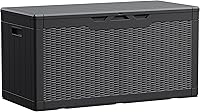
The Keter Westwood 150 Gal Outdoor Storage Box shows that path. Compare Keter deck box options if you want a finished resin alternative.
It has a 150-gallon capacity, a wood-plank look in resin, and an easy-lift lid with a quiet close.
Sizes help you compare a build to a buy. The Keter box measures 61" L x 28.3" W x 25.2" H, while the LIFETIME box is 60" L x 24" W x 27.2" H and the Suncast box is 50" L x 25.5" W x 25.5" H.
That range, 99 to 150 gallons, covers most patio loads. Your wood plan should land in the same range or you will outgrow it in one season.
If a black finish matches your deck, compare our best deck box black picks before you paint a wood build. A factory finish may save a weekend of work.
How do wooden deck box plans compare to ready-made wood boxes?
Wood ready-made boxes save build time but limit size and finish choices. They need the same sealing and care as a shop build.
Our roundup of the best wood deck storage box options helps if you want wood looks with a box that ships assembled or partly assembled. Check interior size, lid load, and hinge type before you order.
A build lets you match your deck board direction and stain color. You can also size the lid as a bench and add dividers where you want them.
A resin box lets you skip the finish cycle entirely. The LIFETIME 60012 uses high-density polyethylene, powder-coated steel hinges, and a lockable lid with a spring hinge for gentle closing.
That box has a two-tone Desert Sand and Brown design. At 130 gallons, it sits between the 99-gallon Suncast and the 150-gallon Keter in capacity.
What mistakes should you avoid with deck box plans?
The biggest mistake is sizing for one item and forgetting the lid. Leave room for the lid frame, hinge clearance, and cushion compression.
The next mistake is a flat floor with no drainage. Raise the floor and leave gaps or drill drain holes in the base frame.
A third mistake is underbuilt hinges. A wide lid with a bench load needs hinges and screws that match the weight.
Painting before sealing the underside is another common error. Seal first, then finish, and coat edges where water enters end grain.
Do not skip a lock if the box will hold tools or pool gear. A simple padlock hasp is cheap insurance against wind and curious hands.
If you want covers for chairs and swings, see our best waterproof patio furniture covers guide.
What if you want porch swing storage too?
Measure swing clearance before you place a tall box. A box that is too tall can block the swing path or make the seat feel cramped.
Our How to Build a Porch Swing: A Quick Guide helps if you are building both projects in one season. Do the swing hang test before you set a bench box under it.
For a seat that also stores gear, compare our best outdoor storage bench picks. A storage bench may fit a narrow porch better than a deep deck box.
Which path fits your patio best?
Pick a wood build if you want a custom size, a stain that matches your deck, and a bench lid built to your height. Pick resin if you want weather resistance, a lockable lid, and no annual sealing.
For big storage with a gentle-close lid, the LIFETIME 60012 at 130 gallons is a strong buy. For a smaller footprint with bench seating, the Suncast 99 Gallon box fits decks and balconies.
For the most capacity with a wood-plank look, the Keter Westwood at 150 gallons leads the group.
Use these wooden deck box plans to set your size, then compare that size to the three boxes above. That one check will tell you if a build is worth it, or if a ready-made box saves you time and upkeep.
Frequently asked questions
How big should a wooden deck box be?
Size it to your longest item plus 2 inches on each end, and your tallest stack plus room for the lid. Measure cushions, pool noodles, and tools before you cut lumber, then add space for airflow and a lock.
What wood is best for an outdoor deck box?
Pressure-treated pine is a common choice for outdoor builds because it resists rot and insects. Cedar and redwood also suit outdoor use, but they cost more and still need sealing and periodic care.
Does a wooden deck box keep rain out?
A tight lid, sloped top, and drip edge help shed rain, but wood boxes rarely stay fully waterproof. Raise the box off the ground, seal joints, and store items that can tolerate some moisture.
Is a resin deck box better than wood?
Resin boxes win for weather resistance and low upkeep, while wood boxes win for looks and custom sizing. If you want a bench seat, lockable lid, and no stain or seal upkeep, a resin box may fit your needs better.