Furniture Covers and Storage: The Complete Buying Guide
A good deck box matches your largest bulky items, your space and your weather, not just gallon numbers. Pick resin for low upkeep, check inside length for cushions, and confirm lid support before you plan to sit on it.
On this page (10 sections)
- What size deck box do you actually need?
- How do resin, wood and other materials compare for a deck box?
- Does a deck box need a cover if it is weather resistant?
- What should you store in a deck box, and how should you pack it?
- Can a deck box work as a bench or extra seat?
- Which deck box style fits your patio, pool or front porch?
- How do you size a deck box for cushions, packages and heavy gear?
- What lid, lock and hinge features should you look for?
- How do you set up and care for a deck box over time?
- Which deck box should you buy for your home?
A good deck box starts with what you need to store at the same time, then fits that load into your space without crowding the patio.
That simple order matters more than it sounds at first.
Cushions, pool floats, garden tools and sports gear all pack in different shapes, so volume alone is not enough to guide you.
A tall stack of floats can use space fast, while flat seat pads need length more than height.
Measure your longest item first, before you look at gallon numbers or colours.
Then check the inside length, width and height of the box, and leave room to lift the lid and reach to the back.
Think about who will use the box each day, because a deep box can be hard to reach into for some people.
A low, long box is often easier to load and unload than a tall, narrow one.
We compared the models below by capacity, inside size, material, lid design and stated seat load so you can see the trade-offs plainly.
That approach helps you spot honest differences, like a lockable lid or a spring hinge, instead of relying on vague claims.
It also helps you notice when a smaller box suits your patio better than a larger one.
This guide is the home post for this part of the site.
It links to every topic cluster we cover, from material choices to covers, cushions and benches, so you can jump to the exact question you need to answer next.
Start with your space, then your load, then the features you will feel every day.
Resin builds suit many homes because they need little upkeep and handle rain and sun well.
A reinforced lid matters only if you plan to sit on the box, so check the stated load before you assume it is a bench.
Assembly is another daily detail, since some models need no assembly while others need a short build with included instructions.
Care is simple for most resin boxes, but a flat, level spot and a dry start for stored items still help a lot.
Use this guide to match the box to your home, not the other way around.
When the size, shape and lid all suit your routine, storage feels easy instead of like another chore.
What size deck box do you actually need?
You need the size that fits your longest item with room to close the lid, not the largest gallon number you can find. A 150 gallon box suits large cushion sets and pool gear, while a 99 gallon box suits a smaller patio and lighter loads.
Short, wide boxes hold long cushions well. Taller boxes can hold bulky items but may need more reach to get things from the bottom.
Inside length is the number to check first for seat cushions and float rafts.
There is a simple way to size your load. Lay out the items you plan to store together on a flat surface.
Group soft items, long items and hard tools in separate piles, then measure the longest pile.
Add a few inches around that pile for hands and for the lid seal. If the box has one open compartment, mixed loads will shift, so plan for the worst case shape.
Order the items you use most near the top or front.
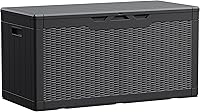
The Suncast 99 Gallon Large Deck Box is 50 in. wide, 25.5 in. deep and 25.5 in. high on the outside. That shape suits a balcony, a deck corner or a spot beside patio chairs where a longer box would crowd the walkway.
Its 99 gallon capacity is close to 100 gallons in practical terms. Suncast points to cushions, gardening tools, sports gear and firewood as typical loads.
Use it for one main category at a time if you want items to stay easy to find.
Our score weighs specs, features and buyer feedback against what you are shopping for. That is why a smaller box can still be the right pick when space is tight.
How do resin, wood and other materials compare for a deck box?
Resin is the lowest upkeep choice for most patios, because it does not need paint, stain or rust care. It handles rain, sun and pool splash with simple wiping, and it is light to move when empty.
Wood brings a traditional look and can be sanded or repainted. It also asks for more work in wet or sunny spots, and joints and fasteners need checks over time.
If you want that look, our guide to the best wood deck storage box walks through the trade-offs in more depth.
Metal and other hard materials can be strong, but sharp edges and heat in direct sun matter for daily use. A lid that gets hot is less pleasant to open with bare hands on a summer day.
For resin specifically, style matters too. A wicker pattern can blend with rattan furniture, and a wood plank look can blend with a deck.
Our best outdoor resin deck box roundup compares resin builds side by side.
Resin does not mean all resin boxes are the same. Wall thickness, lid design and hinge type change how the box feels when you open and close it.
Check those details, not just the material name.
The LIFETIME 60012 Extra Large Deck Box uses high density polyethylene, often shortened to HDPE. That material is described as durable and moisture resistant, with a water resistant seal to help keep stored items dry.
Its two tone Desert Sand and Brown design can sit well beside wood decks. The lid is lockable and has a spring hinge that helps it close gently rather than slam.
Does a deck box need a cover if it is weather resistant?
A deck box does not always need a cover, because many resin models are made for year round outdoor use. A cover helps most when the box sits under trees, in hard sun or in dusty wind.
Dust, pollen, sap and bird patterns settle on a lid and then wash into the seams when it rains. A fitted cover keeps that grime off the lid and can reduce fading on the top surface.
It also gives the box a neater look when it is not in use.
A cover is not a fix for a poor seal. If water can pool on a flat lid or run in at the hinge line, a loose cover can trap moisture instead of helping.
Fit matters more than thickness.
Check the outside length, width and height, then add room for handles and the lock. A cover that is too tight will not go on fast, and one that is too loose will flap in wind.
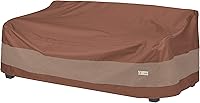
Our best deck box covers guide explains how to match a cover to the box size.
Covers also help with loose items stored on top of the box. If you plan to set planters or drinks on the lid, a cover can make that surface less stable.
Decide whether the top is for storage access or for display before you add a cover.
For furniture you store inside the box, covers matter in a different way. A cushion bag or a furniture cover can protect fabric from scuffs while it is packed.
We cover that side of storage in our best patio furniture covers guide.
What should you store in a deck box, and how should you pack it?
A deck box works best for bulky, weather safe items you use often, such as cushions, pool floats, garden tools, sports gear and firewood.
It is less suited to items that need a dry indoor room or careful climate control.
Start with the longest items at the bottom, laid flat or upright as their shape allows.
Place heavy tools in the middle where they will not press on fabric.
Soft cushions can go on top as a buffer layer.
Keep one category per box when you can.
Mixed loads turn into a hunt every time you need a trowel or a float.
A small tote inside a large box can hold tools and keep them off the cushions.
Photos help you pack the same way each time.
Take a quick photo after a good pack, then copy that layout when you store items again.
It saves time and stops you from forcing the lid down.
If you store cushions, air them out before packing.
Wet fabric sealed in a closed box can develop musty smells.
Dry cushions pack smaller and stay fresher for the next use.
Pool gear needs a rinse and a dry before storage.
Sand, chlorine and algae do not improve with time in a closed box.
A quick rinse and a short air dry will help the whole load last longer.
Firewood and sports gear also benefit from a dry start and a tidy layout.
Our best pool deck storage box guide is written for floats, towels and pool tools.
Read it if the pool is your main reason for buying storage this season.
Can a deck box work as a bench or extra seat?
Some deck boxes can work as a bench, but only when the lid is reinforced and the maker states a seat load. A storage lid that is not made for sitting may flex, crack or pop its hinges under your weight.
Check the stated lid capacity, then picture how weight will spread. Two adults need a long, stable lid with a flat top.
A narrow lid or a lid with a raised handle makes sitting less comfortable.
Bench use also changes how you pack the box. Heavy items near the center help the box stay put.
Loose, light items can shift and make the box feel tippy when you sit on one end.
The Keter Westwood 150 Gal Outdoor Storage Box measures 61 in. long, 28.3 in. wide and 25.2 in. high. Its interior is 56 in. long, 24.6 in. wide and 22.8 in. high, which suits large cushions and pool items.
Keter describes it as lockable, with an easy lift mechanism for open and close. The resin build is all weather resistant, and Keter notes it will not rust, peel or dent like real wood.
The Keter Westwood Outdoor Storage Deck Box in Dark Grey has the same 150 gallon capacity and a 61 in. by 28.34 in. by 25.19 in. outside size. The color is the main visual difference from the Brown version.
Both Keter models suit buyers who want storage that also reads as patio furniture. The flat lid helps items on top stay put while the box is closed.
If bench seating is a core need, read our best outdoor storage bench guide as well. It compares storage benches in more detail, including seat height and lid design.
Which deck box style fits your patio, pool or front porch?
The right style is the one that fits your spot, your loads and the look of the rest of your furniture. A box that fights the layout of the deck will annoy you every time you walk past it.
Long, low boxes work well along a wall or under a window. They hold long cushions and keep the walkway clear.
Shorter boxes work in corners and near doors where a long box would block the swing.
Color matters more than people expect. Brown and tan tones blend with wood decks.
Dark grey and black tones can look sharp with modern furniture. White can brighten a shaded porch but shows dirt faster.
Our best outdoor deck box roundup is a good starting point if you are still deciding between general styles. It groups options by use, so you can match the box to the place it will live.
If your main goal is keeping rain out, read our best waterproof deck storage boxes guide. It focuses on seals, lids and materials that handle wet weather.
If wheels would help you move a heavy box, our best deck box with wheels guide covers that option. Wheels help on smooth patios, but they can make a box roll on a sloped deck.
If you like to build, our how to make a deck box guide walks through a DIY route. A DIY box can match your exact size, but it needs time, tools and a plan for weatherproofing.
How do you size a deck box for cushions, packages and heavy gear?
Cushions need inside length first, because seat pads are long and awkward. Stack the pads you own, measure the stack, then compare it with the inside length and height of the box.
A single compartment is fine for one cushion set. Two sets may need a longer box or a second box for chairs.
Trying to force two sets into one small box will make the lid hard to close.
Our best outdoor cushion storage guide goes deeper on cushion shapes and packing methods. Use it if cushions are the main load and you want to protect fabric between uses.
Packages need a different check. Measure the parcel box you expect to receive, then confirm the inside width and height.
Our best deck box for packages guide covers lockable options for porch deliveries.
Heavy gear needs a weight check. Tools, firewood and sports gear add up fast, and a box that is too heavy to move may stay in one spot forever.
Resin boxes in the 39 lb range are easier to shift when empty than heavier builds.
The LIFETIME model in this guide weighs 52 lb and states a 900 lb maximum weight recommendation for the unit. The Suncast model states a 300 lb lid seat capacity.
The Keter 150 gallon models state a 660 lb maximum weight recommendation.
Those numbers are not the same thing, so read them with care. A lid seat load is about sitting.
A unit weight recommendation is about the load the box can hold. Check which one matters for your plan.
What lid, lock and hinge features should you look for?
A lid should be easy to lift, gentle to close and able to stay open while you reach inside.
Those three traits matter more than a fancy handle shape.
Spring hinges and hydraulic pistons help the lid close slowly.
That reduces slamming and helps you keep fingers clear when your hands are full.
A lid that drops fast can also bounce items inside.
A stay open lid is a must for deep boxes.
You should not need to hold the lid with one hand while you dig with the other.
Check whether the lid opens past 90 degrees or holds at a safe angle.
Locks come in a few forms.
Some boxes have a built in latch.
Others let you add a padlock, which is sold apart.
A lockable lid helps with tools and parcels, but it will not make a plastic box secure against determined theft.
Think about where the box will sit, because a porch box near a door may need a lock more than a box in a fenced yard.
The LIFETIME box has a lockable lid with a spring hinge for gentle closing.
Its lid opens to more than 90 degrees, which makes it easier to reach inside without holding it up.
The Suncast box is pad lockable, with a padlock not included, and has a reinforced lid.
That design suits buyers who already own a padlock and want to add it themselves.
The Keter boxes are lockable, with an easy lift or automatic mechanism.
The Keter Westwood in Brown uses a hydraulic piston and an easy lift mechanism for open and close.
That kind of assist can help when your hands are full of plates, towels or pool gear.
A clear grip also matters in cold or wet weather, when resin can feel slick.
Look for a handle shape you can use with gloves, because garden work often means gloves.
Also check the hinge placement, since a rear hinge gives a different opening arc than a side hinge.
A lid that opens wide needs clear space behind the box, so measure the swing before you place it against a wall.
Those details affect daily use more than gallon size.
If you will open the box many times a day, a smooth hinge and a clear grip matter every single time.
Check the hardware after the first few weeks, and tighten it if the lid starts to drift.
A well cared for hinge will keep the seal seated and the lid closing gently season after season.
How do you set up and care for a deck box over time?
Place the box on level, solid ground and check that the lid closes without bending. A wobble at the base will turn into a lid that does not sit right.
Assembly is simple for most resin boxes. The Suncast model needs no assembly.
The LIFETIME and Keter 150 gallon Brown model need assembly, with instructions included. The Keter Dark Grey model needs minimal assembly.
Take your time with fasteners and hinges. A loose hinge is the most common cause of a lid that drifts or squeaks.
Tighten hardware after the first few weeks of use, then once a season.
Clean the box with mild soap and water, then rinse and dry it. Avoid harsh cleaners that can dull resin or harm seals.
A soft cloth will lift pollen and dust without scratching the surface.
Check the lid seal and hinges twice a year. Look for cracks, warping or loose screws, and fix small issues before they grow.
Resin that is scratched or faded will still work, but a warped lid will not close well.
Store items dry, and air out the box on a dry day from time to time. That plain step helps prevent musty smells and keeps cushions and fabric fresher.
It also lets you spot damage early.
For chairs and swings you do not store inside the box, covers still help. Our best outdoor chair covers and best adirondack chair covers guides cover those pieces, and our best porch swing covers guide covers swings.
Tables need their own covers too. Our best outdoor table covers guide helps you match tables to the right size and shape.
Which deck box should you buy for your home?
Pick the box by your load, your space and whether you want to sit on it. That order will lead you to a better choice than chasing the largest gallon number.
Choose the LIFETIME 60012 if you want a 130 gallon HDPE box with a spring hinge and a lockable lid. Its inside size is 57 in. long, 20.75 in. wide and 23.75 in. high, which suits large loads in a long, low shape.
Choose the Suncast 99 Gallon if space is tight and you want a wicker pattern that blends with patio furniture. Its reinforced lid supports up to 300 lb as a seat, and it needs no assembly.
Choose the Keter Westwood 150 Gal in Brown if you want maximum capacity with a wood plank look and room to seat 2 adults. Its 150 gallon interior is the largest in this guide.
Choose the Keter Westwood in Dark Grey if you want the same 150 gallon capacity in a cooler color. Its flat lid and weather resistant resin suit pool and patio use.
If you want a wood look with a traditional build, read our best wood deck storage box guide next. If you want a specific color, start with our best deck box black, best deck box brown and best deck box white guides.
If brand matters to you, our best deck box rubbermaid and best deck box lifetime guides compare those lines in more detail. If you need a large box for a big load, our best large deck storage box guide is the next stop.
If you need a box that can take hard use, our best heavy duty deck box guide focuses on strength and lid design. Use that guide when the box will hold tools, firewood or heavy sports gear.
Measure your longest item, measure your space, then pick the box that fits both. That simple order will keep your patio tidy and your gear dry for the season ahead.
Frequently asked questions
How do I choose the right deck box capacity?
Start with your longest and bulkiest items, then add working room around them. Gallon size helps you compare boxes, but inside length, width and height decide whether cushions, floats or tools fit without forcing the lid.
Measure the items first, then compare those numbers with the inside size of each box.
Are resin deck boxes better than wood deck boxes?
Resin boxes need less upkeep in wet weather because they do not need paint or stain, and they resist rust in the way wood does not. Wood can suit a traditional look and can be repaired, but it needs more care outdoors.
Your choice depends on upkeep time, looks and how exposed the spot is.
Do I need a cover for a deck box from resin?
Many resin boxes are all weather resistant, so a cover is not always needed. A cover can still add a layer against dust, tree sap and heavy sun.
Choose one that fits the exact outside size and leaves room for the lid handle and lock.
Can a deck box double as a bench?
Some boxes have reinforced lids made for seating, and others do not state a seat load. Check the stated lid capacity before you plan to sit on it, and spread weight evenly.
If seating is a must, make it a deciding factor before you buy.
How do I keep stored cushions dry in a deck box?
Store cushions upright when you can, keep the lid closed, and let wet items air out before you pack them away. Wipe the inside dry on occasion and keep the box on level ground.
A dry start matters as much as a closed lid.
How do I measure a deck box before buying?
Measure the floor space, including room for the lid to open, and check doorways and tight turns on the way in. Then measure your longest item and compare it with the inside length.
A box that fits the patio but not the doorway will not help you.