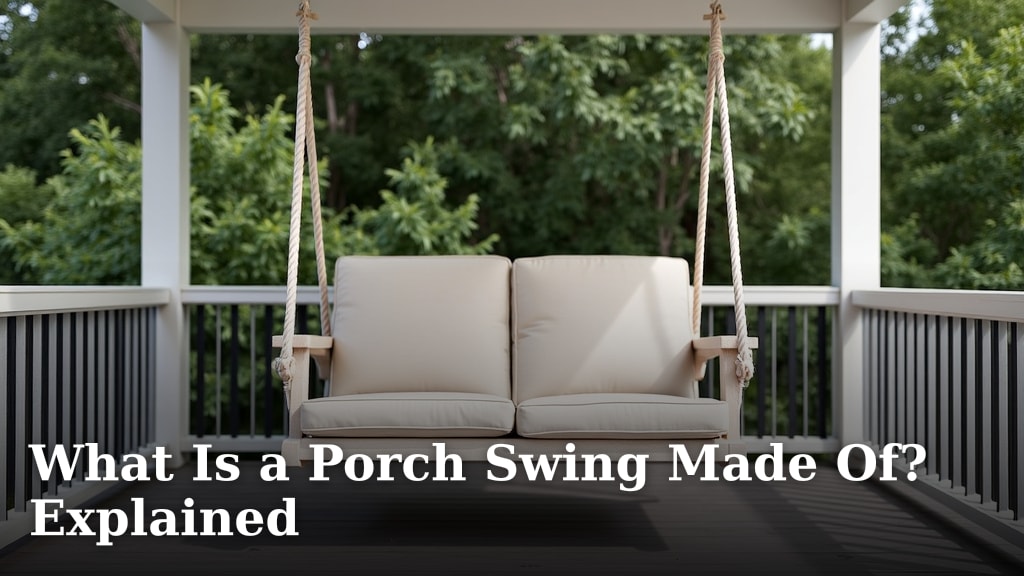
What Is a Porch Swing Made Of? Explained
A porch swing can be made from a variety of materials, most commonly wood, metal, and plastic. Each material offers different benefits in terms of durability, maintenance, and style for your outdoor space. The choice often depends on your budget and the look you’re going for.
When you’re picking out a porch swing, think about how it will hold up to the weather in your area. Wood swings offer a classic charm but might need regular sealing. Metal swings, like wrought iron or aluminum, are very sturdy. Plastic or resin swings are often lightweight and low-maintenance, making them a practical choice for many.
- Porch swings are typically made from wood, metal, or plastic.
- Each material has its own pros and cons for durability and upkeep.
- Consider your local weather and maintenance willingness.
- Wood offers a classic look; metal is strong; plastic is easy to care for.
- Your choice impacts style, longevity, and cost.
Let’s take a closer look at the different materials used for porch swings and what you can expect from each one.
Understanding Porch Swing Materials
You’re probably wondering what makes a porch swing tick. It’s mostly about the stuff it’s made from! The materials used for porch swings are quite varied. They range from classic natural choices to modern, low-maintenance options. We’ve found that the material directly impacts how long your swing will last and how much work you’ll have to do to keep it looking good.
Wood: The Classic Choice for Your Porch Swing
Wood is perhaps the most traditional material for porch swings. It brings a certain timeless charm to any outdoor space. Think of those cozy, inviting porches you’ve seen. Wood often plays a big part in that feeling.
Types of Wood Used
You’ll find porch swings made from several types of wood. Each has its own personality and needs. Some are naturally more resistant to the elements than others.
Hardwoods: Durability and Beauty
Hardwoods like teak, cedar, and oak are excellent choices. Teak, in particular, is famous for its natural oils. These oils make it very resistant to rot, decay, and insect damage. It can withstand sun and rain quite well. Cedar is another great option, known for its natural aroma and resistance to insects. Oak is strong and beautiful, though it might require more sealing.
Softwoods: Affordability and Workability
Softwoods like pine and fir are often more affordable. They are easier to work with, which can make for more intricate designs. However, these woods are generally less resistant to moisture and pests. If you choose a softwood swing, you’ll likely need to apply protective finishes more often.
Wood Swing Maintenance
Owning a wood porch swing means a little bit of upkeep. You’ll want to protect the wood from the weather. This often involves cleaning it annually. Then, you’ll need to reapply a sealant or stain. This keeps it looking fresh and prevents damage. Many guidelines suggest doing this at least once a year (Woodworkers Journal).
Without proper care, wood can warp, crack, or fade. A good sealant acts like a shield. It repels water and UV rays. This helps your swing last for many years. Think of it like giving your swing a fresh coat of sunscreen and rain gear.
Metal: Strength and Style for Your Swing
Metal porch swings offer a different kind of appeal. They are often chosen for their sturdiness and the sleek look they can provide. Metal can also be shaped into elegant designs.
Common Metals in Porch Swings
You’ll see swings made from a few key metals. Each has its own advantages and disadvantages.
Wrought Iron: Classic Elegance
Wrought iron is known for its strength and classic, often ornate, designs. It has a substantial feel to it. However, wrought iron can rust if not properly treated and maintained. You’ll want to make sure it has a good protective coating. Regular checks for rust spots and touching them up are important.
Aluminum: Lightweight and Rust-Resistant
Aluminum is a fantastic option because it’s lightweight. It’s also naturally resistant to rust. This makes it a great choice for humid or rainy climates. Aluminum swings can come in various finishes to mimic the look of other metals. They generally require less maintenance than wrought iron.
Steel: Strong and Versatile
Steel is another strong metal used for porch swings. It’s durable and can be formed into many shapes. Like wrought iron, steel can rust. It typically needs a protective coating, such as powder coating, to prevent this. Steel swings can be a good balance of strength and cost.
Metal Swing Care
Metal swings are generally quite low maintenance. A simple wipe-down with a damp cloth usually does the trick. If you have a wrought iron or unfinished steel swing, you’ll need to watch for rust. Early detection and touch-up paint can prevent it from spreading. For powder-coated finishes, you’re usually in good shape for a long time.
Plastic and Resin: Practical and Easy-Care Options
If low maintenance is your top priority, plastic or resin swings are worth a look. These materials have become very popular. They offer a practical solution for many homeowners.
Understanding Plastic and Resin
These terms are often used interchangeably, but there are differences. Plastic swings are typically made from recycled plastics or virgin polymers. Resin often refers to more durable, composite materials. Some are even made to look like wood. They are designed to withstand the elements.
Benefits of Plastic/Resin Swings
The biggest advantage is ease of care. These swings don’t rot, rust, or splinter. They are also usually lightweight, making them easier to move if needed. Many are UV-resistant, so they won’t fade as quickly in the sun. Cleaning is as simple as a hose-down or a wipe with soap and water.
Potential Downsides
While convenient, plastic and resin swings might not have the same high-end aesthetic as wood or some metals. They can sometimes feel less substantial. In very strong winds, their lighter weight might be a consideration. Also, some lower-quality plastics can become brittle over time with extreme temperature changes.
Other Materials and Composite Options
Beyond the main three, you might see swings made from other materials. Wicker or rattan swings offer a bohemian, natural feel. These are usually best for covered porches as they don’t hold up well to direct rain and sun. They often have a frame made of metal or wood.
Composite materials are also becoming more common. These blend different substances, like recycled plastic and wood fibers. They aim to offer the look of wood with the durability and low maintenance of plastic. We found these can be a good middle-ground option for many.
Choosing the Right Material for You: A Quick Comparison
Deciding on the material can seem tricky. Let’s break down what each offers so you can make an informed choice.
| Material | Pros | Cons | Maintenance Level |
|---|---|---|---|
| Wood | Classic beauty, natural look, versatile styles | Requires regular sealing/staining, can rot/warp, susceptible to pests | High |
| Wrought Iron | Very strong, elegant designs, durable | Heavy, prone to rust if not maintained, can be expensive | Medium to High |
| Aluminum | Lightweight, rust-proof, low maintenance | Can be less visually substantial than iron, can be dented | Low |
| Plastic/Resin | Very low maintenance, weather-resistant, affordable | Can look less premium, may feel lighter, can fade over time | Very Low |
| Composite | Wood-like appearance, durable, low maintenance | Can be expensive, specific look may not appeal to all | Low |
Factors to Consider When Selecting Your Swing Material
Your decision really comes down to a few key things. Think about your climate. If you live somewhere with a lot of rain or intense sun, you’ll want materials that can handle it. Aluminum or well-sealed wood might be good.
Consider your budget. Some materials, like teak or wrought iron, can be pricier upfront. Others, like pine wood or basic plastic, are more budget-friendly. Remember to factor in the cost of maintenance supplies if needed.
And what about your style? Do you love a rustic farmhouse look? Wood might be your go-to. Prefer a modern, clean aesthetic? Aluminum could be perfect. What look are you hoping to achieve on your porch?
Your Porch Swing Material Checklist
Before you buy, run through this quick checklist:
- Where do you live? Consider rain, sun, and humidity.
- How much time for upkeep? Are you okay with regular maintenance?
- What’s your budget? Include initial cost and potential upkeep.
- What style do you want? Match the material to your home’s look.
- How long do you want it to last? Durability varies greatly by material.
- Do you need it to be lightweight? For moving or installation.
By thinking through these points, you’ll be well on your way to picking the perfect material for your porch swing. It’s an investment in your outdoor comfort!
Conclusion
You’ve learned that porch swings come in a variety of materials, each with its own strengths. Wood offers classic charm, metal brings sturdy elegance, and plastic/resin provides easy care. Your choice impacts durability, maintenance needs, and the overall look of your porch. Before you decide, consider your local climate, how much time you want to spend on upkeep, and your personal style. Think about what you need most in a swing to make the best choice for your outdoor space and enjoy your new relaxing spot. If you’re interested in a different motion, learn how to convert a porch swing into a glider.
Frequently Asked Questions
Which porch swing material is best for a very humid climate?
For humid climates, aluminum or well-sealed hardwoods like teak are excellent choices. Aluminum won’t rust, and teak’s natural oils resist moisture damage. Plastic or resin swings also hold up well against humidity. You’ll want to avoid untreated iron or softwoods that can degrade faster in damp conditions.
How often do I really need to maintain a wood porch swing?
Generally, a wood porch swing needs maintenance at least once a year. This typically involves cleaning it thoroughly and then reapplying a protective sealant or stain. Skipping this can lead to warping, cracking, or rot. The exact frequency might depend on how much sun and rain your swing is exposed to.
Can plastic porch swings look as nice as wooden ones?
While plastic swings are very practical, their aesthetic can differ from wood. However, many modern plastic and resin swings are designed to mimic the look of wood or metal quite convincingly. You can find styles that offer a clean, contemporary look or even a rustic feel.
Is wrought iron a good choice if I don’t want to do much maintenance?
Wrought iron is beautiful and strong, but it does require regular maintenance to prevent rust. You’ll need to keep it clean and touch up any paint chips or rust spots promptly. If low maintenance is your top priority, aluminum or plastic/resin swings are likely better options for you.
What’s the main difference between plastic and resin porch swings?
Often, these terms are used interchangeably, but resin can refer to more durable composite materials than basic plastic. Plastic swings might be made from recycled materials or simple polymers. Resin swings are typically engineered for greater strength and weather resistance. Both offer low maintenance compared to wood or untreated metal.