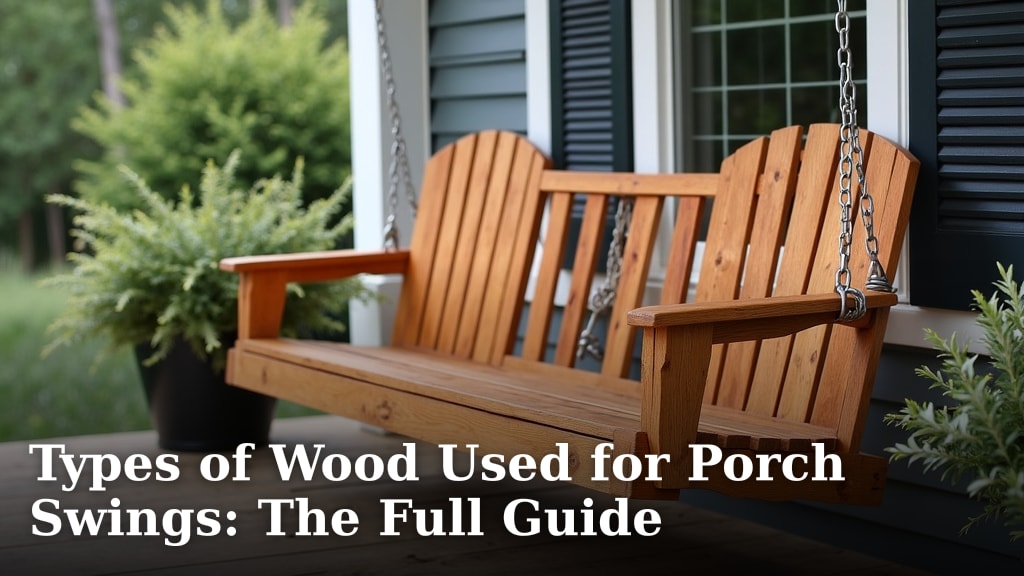
Types of Wood Used for Porch Swings: The Full Guide
Choosing the right wood for your porch swing is key to its longevity and beauty. For outdoor furniture, you’ll want woods that can handle moisture and sun, like cedar, redwood, teak, or treated pine. These woods are naturally resistant to rot and insects, making them excellent choices.
Your porch swing will face the elements, so material selection matters a lot. We found that woods known for their durability and weather resistance are the most popular picks for a reason. Think about how much maintenance you want to do. Some woods require more care than others to stay looking their best.
- Cedar and Redwood are naturally rot and insect resistant.
- Teak is a premium hardwood known for extreme durability.
- Treated Pine is an affordable option that’s chemically protected.
- Hardwoods like Oak can work but need good sealing.
- Some softwoods may warp or rot quickly outdoors.
Let’s break down the common types of wood used for porch swings, so you can pick the perfect one for your backyard oasis. Consider if a single seat porch swing might be the right fit for your space.
Choosing the Right Wood for Your Porch Swing
Your porch swing is more than just furniture. It’s a spot for relaxation, reading, and enjoying gentle breezes. So, picking the best wood for it matters a lot. You want a swing that looks great for years and holds up to sun, rain, and humidity. We’ve looked into what makes a wood a good choice for outdoor use. Many factors go into this decision, from natural resistance to how much upkeep you’re willing to do.
Cedar: A Naturally Smart Choice
Cedar is a wood many people consider first for outdoor projects. This is for good reason. It has natural oils that help it resist rot and insect damage. Think of it like nature’s own sealant. This makes it a fantastic option for swings that will live outside. Cedar can handle damp conditions without breaking down quickly. We found that its pleasant scent is also a nice bonus.
Cedar’s Strengths and Weaknesses
One of the biggest strengths of cedar is its natural durability. It doesn’t need harsh chemical treatments to last outdoors. This is good for your health and the environment. Cedar is also lightweight, making it easier to move or hang your swing. However, cedar is a softwood. This means it can get dents and scratches more easily than hardwoods. You’ll want to be mindful of this if your swing will see heavy use.
Cedar Maintenance Needs
Cedar can be left unfinished to weather to a silvery gray. This natural look is very appealing to many. If you prefer to keep its reddish-brown color, you can apply a sealant or stain. This will need reapplication every few years. We found that regular cleaning will also help it last longer. Just a simple wash with soap and water is usually enough.
Redwood: The Premium Outdoor Wood
Redwood is another top contender for outdoor wood furniture. It’s known for its beautiful color and incredible resistance to decay. Like cedar, redwood contains natural compounds that fight off insects and rot. Many experts suggest redwood for structures that are constantly exposed to the elements (Forest Service). This durability comes with a higher price tag, though. It’s a more premium option for your porch swing.
Why Redwood Stands Out
The beauty of redwood is undeniable. Its rich red hue adds warmth and elegance to any outdoor space. It’s also quite stable, meaning it’s less likely to warp or twist with temperature changes. This stability is important for a swing that needs to be strong and secure. We found that redwood holds up exceptionally well in humid climates.
Caring for Your Redwood Swing
Similar to cedar, redwood can be left to age naturally to a soft gray. If you want to preserve its vibrant color, you’ll need to use a UV-protectant finish. Reapplication is typically needed every couple of years. Regular cleaning helps remove dirt and grime. This prevents mold or mildew growth, keeping your swing looking its best. We found that this simple care routine makes a big difference.
Teak: The King of Outdoor Woods
When budget is less of a concern, teak is often considered the ultimate choice for outdoor furniture. Teak is a dense hardwood that is naturally rich in oils. These oils make it incredibly resistant to water, rot, and insects. It’s so durable that it’s often used on boat decks. This tells you how well it handles moisture and exposure (US Forest Products Laboratory). Teak furniture is an investment that can last for decades.
Teak’s Unmatched Durability
The density of teak makes it incredibly strong. It can withstand heavy use without showing much wear and tear. Its natural oils also give it a beautiful luster. This luster can be maintained or allowed to fade to a silvery gray over time. We found that teak’s ability to resist warping and cracking is superior to most other woods. It truly is built to last.
Maintaining a Teak Porch Swing
Teak requires very little maintenance to maintain its structural integrity. Many owners choose to let their teak furniture weather naturally. This creates a classic, silvery patina. If you want to keep its golden-brown color, you’ll need to apply teak oil periodically. This also helps protect it from UV rays. Regular dusting and occasional cleaning with mild soap and water are sufficient. We found that cleaning teak is straightforward and doesn’t demand much time.
Treated Pine: The Affordable Workhorse
Pine is a softwood, which generally isn’t ideal for outdoor use on its own. However, pressure-treated pine is a popular and budget-friendly option for porch swings. The wood is treated with chemicals under pressure. This forces preservatives deep into the wood. These preservatives protect it from rot, decay, and insects. Many building codes recommend treated lumber for outdoor projects (International Code Council). This treatment significantly extends its lifespan.
Pros and Cons of Treated Pine
The biggest advantage of treated pine is its affordability and availability. You can find it easily at most lumber yards. It offers good protection against moisture and pests at a lower cost. However, it’s still a softwood. It can be prone to denting and splintering more than hardwoods. Also, the chemicals used in treatment can be a concern for some. While generally considered safe when handled properly, it’s something to be aware of.
Caring for Your Treated Pine Swing
Treated pine usually comes with a green or brown tint from the treatment process. It can be stained or painted to match your outdoor decor. To ensure longevity, it’s recommended to seal or paint it. This adds an extra layer of protection against the elements. We found that applying a good quality exterior paint or stain every few years is beneficial. This helps prevent cracking and warping. Regular cleaning will also keep it looking its best.
Other Wood Options to Consider
While cedar, redwood, teak, and treated pine are the most common, other woods can also be used. These might require a bit more attention to ensure they hold up outdoors. We researched several other types that might work for your porch swing project.
Hardwoods like Oak and Maple
Denser hardwoods like white oak and maple can be used for porch swings. They are stronger and more resistant to dents than softwoods. However, they are not naturally as resistant to moisture and rot as cedar or redwood. If you choose oak or maple, you must use a high-quality exterior sealant. This sealant needs to be applied and maintained regularly. We found that without proper sealing, these woods can absorb moisture and eventually decay.
Tropical Hardwoods (Beyond Teak)
There are other tropical hardwoods like Ipe or Shorea. These are very dense and durable, offering excellent resistance to rot and insects. They are often used for decking and outdoor furniture. However, they can be quite expensive and heavy. They also require specific finishes to maintain their appearance. We found that sourcing these woods can sometimes be more challenging than common options.
Key Considerations for Your Porch Swing Wood
When you’re making your final decision, think about these important points. They will help you choose the wood that’s right for you and your home. We’ve summarized the main factors to keep in mind.
- Budget: How much are you willing to spend? Treated pine is the most affordable, while teak is a premium choice.
- Maintenance: How much time do you want to spend caring for your swing? Natural woods like teak might require less upkeep than treated pine if left unfinished.
- Climate: Do you live in a very wet or humid area? Woods with natural resistance are better suited for harsh climates.
- Aesthetics: What look are you going for? Each wood type has its own color and grain, which can affect the overall style.
- Durability: How long do you expect your swing to last? Hardwoods and naturally resistant woods will typically last longer.
A Quick Checklist for Wood Selection
Before you buy, run through this quick checklist. It helps ensure you’re on the right track for your porch swing.
- ✅ Does the wood have natural resistance to rot and insects?
- ✅ Is it suitable for your local climate conditions?
- ✅ Does its maintenance requirement fit your lifestyle?
- ✅ Does the wood’s appearance match your desired aesthetic?
- ✅ Is the wood within your budget for the expected lifespan?
Conclusion
Choosing the right wood for your porch swing means balancing beauty, durability, and your budget. We’ve seen how cedar and redwood offer natural resistance, while teak provides unmatched luxury. Treated pine is a solid, affordable choice for many. Remember to consider your local climate and how much maintenance you’re willing to do. By keeping these factors in mind, you can confidently select a wood that will provide years of relaxation and enjoyment on your porch. Your next step is to look for swings made from these recommended woods and envision them in your outdoor space.
Frequently Asked Questions
What’s the best wood for a porch swing in a rainy climate?
For wet climates, woods with natural resistance to rot and insects are best. Cedar and redwood are excellent choices because their natural oils protect them. Teak is also highly recommended due to its density and natural oils, making it exceptionally water-resistant.
Do I really need to seal treated pine?
Yes, it’s highly recommended to seal or paint treated pine. While the treatment protects against rot and insects, an additional exterior finish adds a layer of protection against moisture and UV rays. This helps prevent cracking and warping, extending the life of your swing.
Can I leave my wooden porch swing unfinished?
You can leave some unfinished woods like cedar, redwood, and teak to weather naturally to a gray patina. This doesn’t affect their structural integrity. However, other woods, like oak, require sealing to prevent moisture absorption and decay. Check the specific wood’s properties before deciding to go unfinished.
Is hardwood always better than softwood for a porch swing?
Hardwoods are generally more durable and dent-resistant than softwoods. However, some softwoods like cedar and redwood have natural oils that make them very weather-resistant. So, while hardwoods like oak can be good if properly sealed, a naturally resistant softwood can also be an excellent, lower-maintenance choice.
How often should I clean my porch swing?
Regular cleaning, even just a gentle wipe-down with mild soap and water, is beneficial for all wood types. This helps remove dirt, mildew, and debris that can degrade the wood over time. Aim for a quick clean every few months, with deeper washes as needed, especially before and after periods of heavy use.