How to Choose a Porch Swing Enclosure
Choose a porch swing enclosure by matching its fit, ventilation, access and weather protection to your space. Measure the swing and the area around it, then decide whether you need shade overhead or coverage around the seating.
On this page (7 sections)
A porch swing with enclosure should fit the space, let you get in and out easily, and provide the level of coverage you want. Start by deciding whether you need a canopy above the seat or a larger structure around it.
Measure the swing, the clear area around it and the space overhead before comparing options. For a quick overview of overhead coverage, see [What Is a Covered Porch Swing?
Explained](/what-is-a-covered-porch-swing/).
What does a porch swing enclosure include?
A porch swing enclosure may mean a canopy attached to the swing or a separate structure that surrounds the seating area. Check which parts are actually covered before you buy, since a roof, side screens and curtains serve different purposes.
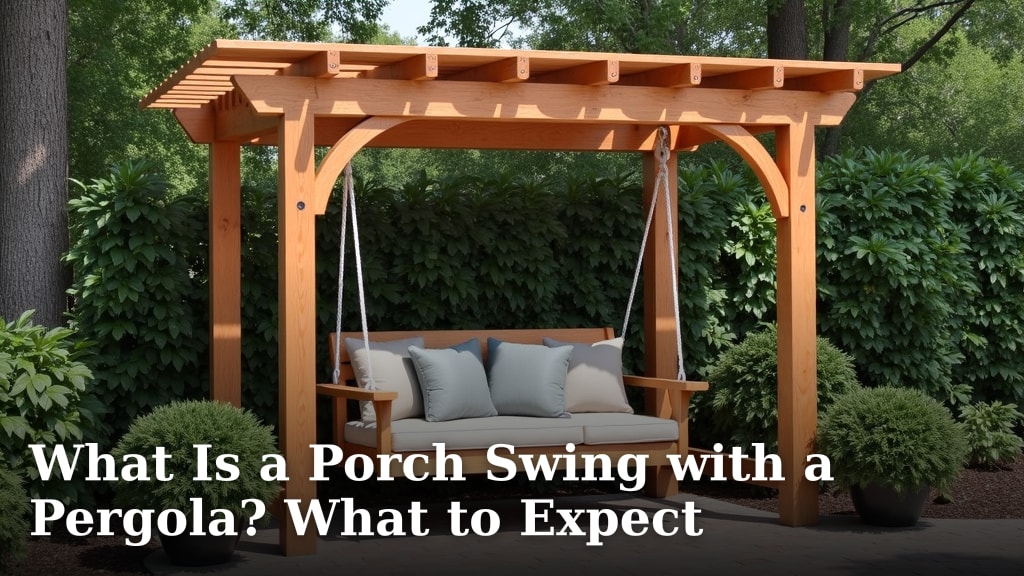
A canopy sits overhead and can help shade the seat. A pergola or screened structure may define a larger area, but it needs its own floor space and a compatible swing setup.
If you are considering a larger overhead structure, What Is a Porch Swing with a Pergola? What to Expect explains how that arrangement differs from a swing with an attached cover.
How should you check fit and clearance?
Measure the full footprint and movement area, not just the width of the seat. The swing needs room to move, and people need a clear path to sit down and stand up.
Check these measurements before choosing:
- Overall swing width, depth and height
- Available floor space, including the stand or supporting structure
- Overhead clearance for the canopy and nearby beams
- Space in front of and behind the seat for its movement
- Room to walk around the swing and reach the seating
Use the manufacturer's dimensions for the complete setup. A seat may fit between two posts while its frame or canopy does not.
For a freestanding swing, consider the ground surface and whether the feet will sit evenly. If the swing hangs from a porch structure, confirm that the support and mounting method are suitable for the swing.
How much ventilation and access do you need?
Keep the seating area open enough for fresh air and easy entry. A canopy covers the top but leaves the sides open, while screens or curtains can change airflow and access.
A screened enclosure can help create a more defined sitting area. Before choosing one, check for doors or openings that let you reach the swing without squeezing past a frame or furniture.
Consider how you will use the space. If you plan to carry drinks, cushions or other items to the seat, a wide, unobstructed path is useful.
If you want shade without enclosing the sides, compare best porch swings with canopy.
What weather protection can a canopy provide?
A canopy can provide overhead shade and some shelter from light rain, depending on its design and fabric. It does not protect every side of the swing from wind-driven rain or make outdoor cushions suitable to leave out in all weather.
Compare the canopy's adjustability and fabric details. An adjustable top can help you change the angle for the sun, while a removable canopy may be easier to take down when you want open sky or need to store it.
For longer coverage, consider whether a separate roof or pergola fits your space and maintenance preferences. The porch swing with a pergola guide covers that option.
Which canopy swing features suit your needs?
Choose a swing whose frame, canopy and seating layout match your space. If you want seating in two directions, compare a double-sided porch swing.
The examples below have stands and canopies, so they may help if you want an all-in-one seating setup rather than a separate enclosure.
ZZW's swing includes a metal frame, adjustable canopy, cushions and two pillows. Its canopy angle adjusts up to 45°, and the seat converts between a swing chair and a bed.
Aoxun's swing has a powder-coated steel frame, canopy and cushions. Its canopy adjusts within 60°, and the backrest can fold down to make a flat bed.
Tangkula's swing has a solid steel frame, polyester fabric and cushions. Its canopy angle adjusts, and you can remove the canopy when you want to sit in the sun.
These are canopy swings, not screened enclosures. If your main need is coverage around the sides, make sure a separate enclosure is compatible with the swing and leaves a clear entry path.
What should you check before buying?
Confirm dimensions, assembly needs and care instructions before you settle on a design. Product names and photos may not show the clearances or access details your space requires.
Check the swing's full dimensions against your measurements. For models with stands, include the footprint of the feet and leave room for the seat to move.
Read the assembly and care instructions for the frame and canopy. If a component needs replacing, see the porch swing parts guide for replacement options.
Plan where cushions will go during wet or windy weather, and check whether the canopy is adjustable or removable if those features matter to you.
If your space is tight, a smaller swing or a different style may be easier to place. Compare a rocking porch swing or a patio swinging chair design if you do not need a wide bench seat.
How do you choose the right enclosure?
Choose the setup that meets your main coverage need while preserving fit and access. A canopy is a practical starting point for overhead shade; a separate enclosure suits you only if you have room for its structure and clear entry.
Pick an adjustable canopy if the sun moves across your seating area. Consider a removable top if you sometimes want open sky, and look at screened sides when the enclosure itself is your priority.
Before ordering, recheck measurements and support requirements, then compare your other seating options, including how to choose a hammock. That decision will help you choose between a covered swing, an enclosed seating area or a different outdoor seat.
Frequently asked questions
What does a porch swing enclosure cover?
A porch swing enclosure can mean a canopy above a swing or a screened structure around it. A canopy provides overhead shade and some protection from sun or light rain, while screens can help define a space and limit exposure to insects.
Check what the specific design covers before choosing.
Does a porch swing canopy keep rain out?
A canopy may offer some protection from light rain, but it does not make a porch swing fully weatherproof. Wind can carry rain onto the seat, and fabric and frame care still matter.
Check the canopy material and care instructions, and move cushions indoors when conditions call for it.
How do I measure for a porch swing with an enclosure?
Measure the swing's full width, depth and height, then measure the floor area and overhead clearance where it will sit. Leave room for the seat to move and for people to enter and exit.
For an enclosed structure, also check door openings and any posts or screens that could block access.
Is a canopy the same as a porch swing enclosure?
No. A canopy is a cover above the swing, while an enclosure usually describes a larger structure around the seating area.
Canopies can provide shade without enclosing the sides.
Decide whether you need overhead coverage, screened sides or both, then compare designs that match that need.
Can I add a canopy to any porch swing?
No. Canopy fit depends on the swing's frame and attachment points, so a universal fit should not be assumed.
Check the swing and canopy instructions for compatibility, dimensions and mounting needs before buying.
A swing designed with its own canopy can make that fit easier to assess.