Patio Side Table Ideas for Your Outdoor Seating Area
The best patio side table idea matches your seating layout: use a compact table beside each chair, a larger table between seats, or a cooler table when drinks are the main need.
On this page (9 sections)
- Which patio side table ideas work for different seating layouts?
- What table height works beside patio chairs?
- Which table shape suits your patio?
- What are practical patio side table ideas for small spaces?
- Should a patio side table include storage?
- How should you place patio side tables around a sofa?
- How do you choose between a basic table and a cooler table?
- What should you check before arranging the patio?
- Which patio side table idea should you choose?
The best patio side table idea matches your seating layout, available floor space and daily use. A table that suits a single reading chair may feel too small between two lounge chairs, and a shared surface can feel cramped beside a wide sofa.
Choose a compact table beside each chair, a shared table between seats, or a cooler table when chilled drinks are the main need. That first decision keeps the layout clear and helps each table earn its place.
Start by measuring the space beside and between your furniture. Measure the gap at seat height, not only at floor level, because chair arms and cushions can narrow the usable area.
Also note where doors, railings and walkways sit, since even a small table can block a route if placed without care. Leave enough room to walk past, pull a chair out and reach drinks without leaning across another person.
Test the layout from the seat as well as from the door. If guests must squeeze past, or a seated person must twist to reach a cup, move the table or choose a narrower design.
Consider how the setup is used each day. A quiet corner may need only a simple surface for a book and a glass.
A seating area used for gatherings may need more room for plates, phones and extra drinks.
Surface size matters for comfort as well as fit. A top that holds only one drink may suit solo reading, but it can become awkward when two people share a table.
Which patio side table ideas work for different seating layouts?
The most useful patio side table ideas place a stable surface within easy reach of every seat. Your seating pattern determines whether you need one shared table, several small tables or a table that serves more than one purpose.
| Seating layout | Useful table plan | What to check |
|---|---|---|
| One lounge chair | One narrow side table beside the dominant hand | Keep the surface close without blocking the arm |
| Two separate chairs | One table between chairs or one per chair | Compare reach distance and walkway space |
| Outdoor sofa | One end table at each arm | Match table height to the sofa arms |
| Loveseat | One central table or two end tables | Consider whether both seats need a drink surface |
| Sectional | One table at the open end and small tables at corners | Keep the inside corner free of clutter |
| Dining or rocking chairs | Compact tables beside the seats | Check leg clearance and chair movement |
| Hot tub seating | A raised table outside the tub edge | Keep drinks and phones within reach but away from splashing |
For a broader look at materials, shapes and placement, read our best outdoor tables complete buying guide. It can help you compare a side table with coffee tables, dining tables and other patio surfaces.
How many patio side tables do you need?
Use one table for every seat that needs a drink, book or phone within reach. A shared table can work for two chairs when the tabletop sits near both arms and does not force either person to lean forward.
A sofa often benefits from an end table at each side. Compare patio end table sets of two.
This keeps the middle open for people and leaves each arm with a nearby surface.
For a sectional, start at the open end and add tables only where people regularly sit. Too many tables can make a small patio feel crowded and create extra corners to walk around.
What table height works beside patio chairs?
A side table usually works best when its top sits close to the chair arm or the height of the seat cushion. The right height lets you set down a drink without lifting your shoulder or bending far forward.
Measure from the patio floor to the top of the chair arm. Then compare that measurement with the table height, while allowing for cushions that compress when occupied.
A lower table can suit a deep lounge chair or a low Adirondack-style seat. A taller table may work better beside a raised chair, a hot tub or a seat with high arms.
The Keter table changes how you can use its surface. The top rises 10 inches above the rim for bar use, and the overall height changes from 22.5 inches to 32.5 inches.
The Keter Pacific Cool Bar has a 19.5 in D x 19.5 in W x 33.2 in H footprint and a pedestal base. Its lid can work as a coffee table when closed, then lift for a raised serving surface.
The cooler holds up to forty 12 oz. cans, and the built-in drainage plug helps remove melted ice. The resin exterior is designed for outdoor use and has an elegant brown rattan finish.
This is a strong patio side table idea for a party zone, hot tub area or sofa where drinks need to stay nearby. It takes more vertical space than a simple low table, so measure around chair arms, umbrellas and overhead features first.
Which table shape suits your patio?
Choose a square table when you want an orderly corner, a round table when you need softer edges around moving people, and a narrow table when the patio is short on floor space. Shape affects both walking clearance and the amount of usable tabletop.
Square tables for corners and matching furniture
A square side table fits neatly beside a sofa arm or between two chairs. Its straight edges make it easier to line up with furniture, walls and deck boards.
Measure the full width of the table, not just the area where the legs sit. Corners can extend into a walkway even when the base appears narrow.
A square top also gives you clear zones for a drink, small plate and phone. See our guide to the best square outdoor side table if this shape fits your seating plan.
Round tables for busy walkways
Round tables work well where people pass on several sides. They have no exposed corners, which can make a compact seating area easier to move around.
Check the tabletop diameter and the table's widest point. A round table can still take more floor space than a narrow rectangular table with the same usable surface.
Use a round table between chairs when you want the surface to serve both seats. Compare more options in our guide to the best round outdoor side table.
White tables for light patio designs
A white or light-colored table can brighten a shaded porch and pair with pale cushions or painted furniture. It also makes stains and dirt easier to notice, so consider how often you want to wipe the surface.
Color should support the rest of the seating area rather than compete with it. For more ideas, see our guide to the best white outdoor end table.
What are practical patio side table ideas for small spaces?
For a small patio, choose a table with a narrow footprint, a folding design or more than one useful function. Keep the route from the door to the seating open, then place the table on the side that is easiest to reach.
A compact table can hold one drink and a phone without taking over the seating area. A folding table can be moved away when you need space for guests or cleaning.
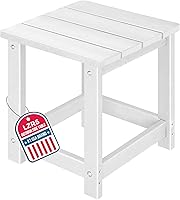
The POLYWOOD South Beach 18 in Outdoor Side Table has a slate grey finish and a leg base. Its size suits a single chair or a small gap beside a sofa, especially when you need a simple surface rather than storage.
Polywood says the table resists splinters, cracks, chips, peeling and rot. It also says the table needs no painting, staining or waterproofing, and that soap and water can clean stains from wine and condiments.
The table includes hardware and an installation tool. It can pair with South Beach Adirondack chairs, dining chairs, chaise lounges and rocking chairs.
For a table that can leave the patio when needed, compare the best small folding patio table options. Folding furniture is useful when the same area serves seating, gardening or entertaining.
Should a patio side table include storage?
Choose open storage when you want books, towels or small patio items close by. Choose a clear tabletop when you prefer quick cleaning and fewer places for dust, leaves or rainwater to collect.
Storage works best when you have a specific use for it. A shelf can hold items that would otherwise sit on the floor, but it can also make the table look crowded.
The Furinno table offers 3 open tiers, but its material and product description suit indoor rooms rather than outdoor exposure. Treat it as an option for a covered porch only if the location protects it from the conditions your outdoor furniture must handle.
The Furinno JUST Toolless 3-Tier Side Table measures 11.5 in D x 13.4 in W x 22.8 in H. Each shelf holds up to 20 lb, with a total unit capacity of up to 60 lb.
Its French Oak Grey and Black finish uses composite wood and plastic tubes. The table requires assembly with a screwdriver and hammer, and the package includes an assembly guide, hardware pack and shelf panels.
This narrow design can fit beside a chair where width is limited, while the 3 tiers keep supplies off the floor. Wipe it with a clean damp cloth and avoid harsh chemicals.
How should you place patio side tables around a sofa?
Place an end table beside each sofa arm when both sides need a drink surface. This gives each end seat a clear place for a cup, phone or small plate without reaching across the middle.
It also keeps the sofa center open for conversation and relaxed stretching. A low central table may look tidy, yet it can make sitting down harder in a narrow patio.
A table at one end can be enough when the other side faces a wall, railing or walkway. Put the table on the side with the most active use, such as the main seat or the side nearest the door.
For a sectional, avoid filling the inside corner unless the table has a clear purpose. That corner is often awkward to reach and difficult to clean, especially when cushions and throws collect there.
A small table at the open end may serve more people while keeping the corner easier to clean. It can sit within reach of the chaise or the last seat without crowding the bend of the sectional.
Keep tables far enough from doors and gates that they do not block the swing path. A door that opens over a tabletop can cause spills and make entry feel tight.
Also check that umbrellas, grills and storage boxes can open without hitting the tabletop. An umbrella pole, a grill lid or a storage lid may need more vertical room than the table height suggests.
Match table height to the sofa arms before you commit to a spot. A table well below the arm can be hard to reach, while one that rises too high may crowd the seat.
How do you choose between a basic table and a cooler table?
Choose a basic side table for everyday drinks, snacks and books. Choose a cooler table when you regularly host guests and want chilled drinks stored at the seating area.
The Keter Pacific Cool Bar is the most functional choice here for gatherings because its hidden cooler holds 7.5 gallons and its lid changes into a raised bar surface. Its larger height and party-focused design may be unnecessary for a quiet reading chair.
The POLYWOOD South Beach table is better for a simple, low-maintenance surface beside a chair. Its 15 in W x 19 in D x 18 in H size is easier to fit into a small seating layout.
The Furinno table makes sense when open storage matters in a covered area. Its 22.8 in height and 3 shelves suit items such as books or lamps, but its composite wood construction calls for more careful placement than an outdoor resin or recycled-lumber table.
Our score weighs the listed specs and features against the needs of patio side table ideas. Check the exact dimensions and intended placement before you order.
What should you check before arranging the patio?
Check table width, height, walking clearance and surface use before choosing a final position. A table that fits on paper may still make the patio awkward if it blocks a door or leaves no room to move a chair.
Use this quick layout check:
- Measure the gap beside or between the seats.
- Compare the tabletop height with the chair arm.
- Mark the table footprint with tape.
- Walk the normal route from the door to the seating.
- Pull each chair out and check for contact.
- Place a drink, phone and small plate on the planned surface.
- Check whether rain, shade or a roof changes the table's care needs.
Give every table a job. A clear purpose helps you avoid filling a small patio with furniture that rarely gets used.
Which patio side table idea should you choose?
Choose a cooler table if your seating area hosts drinks and snacks, a compact outdoor table if you need a simple surface beside one chair, and a shelved table for a covered space where storage matters. Start with the job the table must do each day.
For the most flexible outdoor setup, start with the POLYWOOD table. Its 15 in W x 19 in D x 18 in H size fits beside an Adirondack chair, dining chair, chaise lounge or rocking chair without taking over a small patio.
The surface is sized for drinks and snacks, which suits everyday use more than party service. Its material also suits open outdoor placement.
The table is made from solid recycled lumber with the look of painted wood, and it resists splinters, cracks, chips, peeling and rot. It needs no painting, staining or waterproofing, and stains can be cleaned with soap and water.
Choose the Keter when entertaining is central to the seating area. The Keter Pacific Cool Bar has a 19.5 in D x 19.5 in W footprint and a pedestal base, with a lid that lifts 10 inches above the rim for use as a raised bar surface.
Its hidden cooler holds 7.5 gallons, enough for up to forty 12 oz. cans, so drinks stay close to guests during gatherings. That same design is a greater commitment for a quiet reading corner.
The overall height changes from 22.5 inches to 32.5 inches when the top is raised, which takes more vertical space than a simple low table. Measure around chair arms and overhead features first, and consider whether cold storage is needed often enough to justify the larger presence.
Use the Furinno only where its indoor-oriented materials and open shelves fit the location. The Furinno JUST Toolless 3-Tier Side Table measures 11.5 in D x 13.4 in W x 22.8 in H, with three open tiers for books, lamps or small items.
Each shelf holds up to 20 lb, with a total capacity of up to 60 lb, so it suits light storage rather than heavy patio loads. It uses composite wood and plastic tubes, requires assembly with a screwdriver and hammer, and should be wiped with a clean damp cloth while harsh chemicals are avoided.
A covered porch can work, yet an exposed spot that faces rain and sun calls for a more weather suited material. Match the table to the seat, then leave enough room to walk, reach and clean.