Outdoor Cushions: The Complete Buying Guide
Choose outdoor cushions by measuring the furniture first, then match the cushion shape, thickness, fabric and care needs to how you use the space. A snug fit and a plan for wet weather matter as much as color.
On this page (9 sections)
- How do you measure outdoor cushions for a good fit?
- Which outdoor cushion material suits your weather?
- What cushion shape and thickness do you need?
- Which cushion colors work with your outdoor space?
- Do you need cushions, covers or outdoor pillows?
- Four outdoor cushions to consider by use
- How do you care for outdoor cushions?
- Explore outdoor cushions by topic
- How should you choose your outdoor cushions?
Choose outdoor cushions that fit your furniture and your weather routine. Measure the seat and back first, then compare shape, thickness, fabric, filling and cleaning needs before choosing a color or style.
A cushion that is too deep can crowd the seat, while one that is too narrow may shift around. Think about where you’ll store it when the weather turns, too.
This guide covers chair pads, deep-seat sets, replacement cushions, covers and accent pillows. Start with the fit, then explore the specific styles and furniture types that match your space.
For a complete patio setup, compare outdoor tables too.
How do you measure outdoor cushions for a good fit?
Measure the usable seating area, then compare it with the cushion’s width, depth and thickness. Measure the back separately if you need a seat-and-back set.
For a chair, measure inside the arms if they limit the cushion width. Check both the front and rear widths if the seat tapers, and note whether the back corners are square or rounded.
For a bench or sofa, measure the full seat width and depth. If you’re replacing several cushions, measure each section and note whether the set needs corner or center pieces.
| Furniture detail | What to measure |
|---|---|
| Seat width | Side to side at the widest usable point |
| Seat depth | Front edge to the back of the seating area |
| Cushion thickness | Available space before arms or table height feel awkward |
| Back cushion | Width and height of the usable back |
| Shape | Square, rectangular, curved, tapered or sectional |
| Attachment | Tie locations and places where straps can reach |
Measure the furniture itself rather than relying on an old cushion that has compressed or stretched. If a replacement is close to the frame dimensions, check the shape and thickness carefully before ordering.
For deep-seat furniture, measure the seat and back as separate pieces. Our guide to best outdoor cushions for wicker furniture can help if you’re fitting cushions to a woven frame.
Which outdoor cushion material suits your weather?
Choose fabric based on sun, rain, spills and storage, and read care instructions before you buy. Outdoor fabrics can resist fading or repel water, but those features don’t make every cushion suitable for staying wet.
Polyester is common in outdoor cushion covers. Some designs add a water-resistant layer, while others focus on fade resistance or easy removal for cleaning.
Compare the specific features instead of treating “outdoor” as a promise of all-weather protection.
Foam and fiber fills feel and recover differently. A thicker foam cushion may suit a deep lounge seat, while a thinner chair pad can work where the frame already provides support.
Water protection also varies. A water-repellent surface may shed splashes, while a waterproof cover aims to limit water from reaching the filling.
For more detail, see our best waterproof outdoor cushions guide.
Plan for dry storage, especially in heavy rain, snow or long stretches without use. Remove covers for washing only when their care instructions allow it, and let cushions dry fully before storing them.
If your cushions sit in strong sun, compare options in our best Sunbrella outdoor cushions guide. For a wider comparison of removable styles, see best outdoor cushions with removable covers.
What cushion shape and thickness do you need?
Match the cushion’s shape and thickness to the seat, since those dimensions affect fit and how much room remains. A chair pad, deep-seat set and curved replacement cushion serve different furniture shapes.
Chair cushions often come as individual pads or sets. A pad may have ties to hold it in place, while a seat-and-back set covers more of the chair.
Compare the measurements of both pieces, not just the seat.
Deep-seat cushions usually have a thicker seat and a separate back cushion. They suit lounge furniture when the frame is designed for that depth, but can make a shallow seat feel crowded.
Curved and sectional cushions need close measurement. Check the position of corners, the direction of curves and whether pieces are made for a specific arrangement.
Our best curved replacement outdoor cushions guide focuses on this less-standard fit.
For larger replacement projects, compare best replacement outdoor cushions sets and best replacement outdoor couch cushions. They can help you sort multi-piece sets from individual cushions.
How do you choose cushions for each type of furniture?
Choose a cushion made for the furniture’s seat shape and intended use. A cushion designed for a dining chair may not have the depth or coverage a lounge seat needs.
For individual chairs, check the seat dimensions, attachment method and thickness. Browse our best patio chair cushions for chair-specific options, or compare best outdoor cushions with ties when you want help keeping pads in place.
Lounge chairs need longer cushions that cover the seat and back. Measure the whole sitting surface and look at our best outdoor cushions for lounge chairs for options aimed at that shape.
Benches, porch swings and gliders need cushions that span a longer seat. Check the seat width and whether the furniture has a back cushion, then compare best outdoor bench cushions, best porch swing cushions and best outdoor glider cushions.
For Adirondack chairs, the back and seat angles affect cushion fit. See best Adirondack chair cushions for styles designed around that chair shape.
Which cushion colors work with your outdoor space?
Choose a color that suits the furniture and the amount of upkeep you want. Neutral frames can take a stronger cushion color, while patterned or colorful furniture may pair more easily with a plain cover.
Navy blue and gray work well when you want a defined color without a bright accent. Compare best outdoor cushions in navy blue and best gray outdoor cushions.
Green can tie a seating area to plants and garden colors. If you want a deeper accent, look at best green outdoor cushions.
Red, orange and pink create brighter focal points, with options in best red outdoor cushions, best orange outdoor cushions and best pink outdoor cushions.
Black can create a strong contrast with pale furniture, but it may show lint or pollen. For a swing, compare black porch swing cushions.
Check how the fabric handles sun exposure and cleaning before settling on a dark color.
Details can change the look without changing the whole set. Compare best outdoor cushions with piping for a defined edge, and consider best outdoor cushions for kids if you want options suited to a family seating area.
Do you need cushions, covers or outdoor pillows?
Choose a full cushion when you need both a cover and filling, and choose a cover when the existing cushion still fits and feels supportive. Pillows add back or lumbar support without replacing the seat cushion.
Replacement cushion covers can refresh a set when the foam is still in good shape. Check the cushion’s dimensions and closure style before buying, and compare our best outdoor cushion covers guide.
Outdoor throw pillows add color or a soft backrest. Lumbar pillows offer a longer shape that can sit behind the lower back, while pillow covers let you change the look without replacing the insert.
Explore best outdoor pillow covers, best outdoor throw pillows and best outdoor lumbar pillows.
If you want to make cushions yourself, start with measurements and fabric suitable for their location. Our how to make outdoor cushions guide covers the basic planning.
Four outdoor cushions to consider by use
These options cover individual chair pads, seat-and-back seating, thin chair cushions and a multi-piece sectional set. Measure your furniture before choosing, since each set has different dimensions and contents.
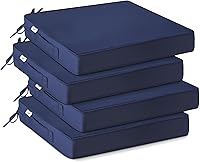
IPYNBAP’s set has a waterproof and fade-resistant polyester cover, foam filling and piped edges. The 3 in thickness and square shape suit chairs with a matching seat area.
Favoyard’s set has a 22 x 24 x 4 in seat cushion and a separate back cushion. The brand describes the fabric as fade-resistant and uses a water-resistant cover with a TPU layer.
Summsun’s thinner pads may fit chairs with less room for a cushion. The brand describes the polyester covers as water resistant and fade resistant, and recommends indoor or covered storage during heavy rain.
Aoxun’s set includes seat, back and corner cushions for a six-seat arrangement. Measure each section before buying, since the pieces are designed around a specific sectional layout.
For more color options, see best outdoor cushions in black and best outdoor cushions in blue. If cost is the main concern, compare cheap outdoor cushions against the features and fit you need.
How do you care for outdoor cushions?
Follow the care instructions for the cover and filling, and dry cushions before putting them away. Removable, washable covers can make cleanup easier, but the care label determines what washing method is suitable.
Brush away loose dirt before it settles into the fabric. For spills, clean the affected area promptly with a method suited to the material, then allow it to dry fully.
Store cushions in a dry place during heavy weather or long periods of non-use. A cover can help protect furniture and cushions in place, but it doesn’t replace dry storage when moisture may linger.
If the foam or cover is damaged, check whether you can replace only the cover or need a full cushion. Compare the existing cushion’s measurements before choosing a replacement set.
Explore outdoor cushions by topic
- Best Indoor Rocking Chair Cushions
- Best Outdoor Rocking Chair Cushions
How should you choose your outdoor cushions?
Pick the cushion that fits your seat first, then choose material, care features and color. Start with individual chair pads for dining chairs, deep-seat sets for lounge furniture, and a full replacement set when you’re refreshing a sectional.
Measure every piece, including backs and corners. If the current cushion still works, a cover or accent pillow may be enough; if it has lost its shape, compare replacement cushions sized for the furniture.
Browse our best outdoor patio cushions for more options across common seating styles. For a roomier seat, compare best large outdoor cushions before deciding.
Frequently asked questions
How do I measure for outdoor cushions?
Measure the furniture's seating area at its widest and deepest points, then compare those measurements with the cushion dimensions. For a back cushion, measure the usable back height and width too.
Check whether the shape is square, rectangular, curved or sectional, and allow for arms and frame edges.
Are waterproof outdoor cushions fully waterproof?
Waterproof and water-resistant describe different levels of protection, and neither means a cushion should stay wet for long periods. Check the fabric and cover details, then dry cushions after rain and store them during heavy weather or long periods without use.
Are removable outdoor cushion covers better?
Removable covers make routine cleaning easier when the care instructions allow washing. Check how the cover closes, whether it can be machine washed, and whether the foam insert also needs protection.
A removable cover does not mean the cushion can be left out in every kind of weather.
How thick should outdoor cushions be?
Choose thickness based on the chair's seat depth and how much of the frame you want covered. A thicker cushion can raise your sitting position and reduce usable seat depth, so compare thickness with the chair dimensions and test the fit before settling on a style.
How should I store outdoor cushions?
Bring cushions indoors or put them in a dry storage box during heavy rain, snow or long periods of non-use. Let damp cushions dry before storing them, and follow the care instructions for the covers and filling.
A furniture cover can help protect cushions while they are in place.