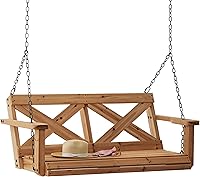
How to Choose a Cypress Porch Swing
Choose a cypress porch swing by checking its wood construction, finish, seating dimensions and mounting requirements. Measure your porch and support structure first, then compare the swing’s size and hanging setup with the space you have.
On this page (8 sections)
- What should you check on a cypress porch swing?
- How does cypress compare with other swing woods?
- Which finish works for a cypress swing?
- What size cypress porch swing fits your space?
- How do you check mounting requirements?
- Which porch swings illustrate useful comparison points?
- What measurements should you take before ordering?
- What is the best way to choose a cypress porch swing?
Choose a cypress porch swing by comparing wood construction, finish, seating size and mounting requirements. Measure your porch and support structure first, then match the swing’s dimensions and hanging setup to the space.
Cypress is one of several woods used for porch swings. The wood species matters, but so do the thickness of the seat parts, how they are joined, the finish, and the care the swing needs outdoors.
See our guide to Types of Wood Used for Porch Swings: The Full Guide for a broader comparison.
What should you check on a cypress porch swing?
Check the wood, construction, finish and maker’s care instructions before comparing styles. A cypress label alone does not tell you the seat’s dimensions, hardware, or how it should be maintained.
Look for clear information about the wood used throughout the seat. Some swings may use one wood for the seat and another for supports or hardware, so check the frame and slats rather than relying only on a product name.
Construction details help you judge whether a swing suits your expected use. Note how thick the slats are, how they attach to the frame, and whether the seat and back have a shape you find comfortable.
Finish affects the swing’s appearance and maintenance. Compare stained, painted and unfinished options, then read the care instructions for the finish you plan to keep.
If the maker does not explain outdoor care, ask before buying.
Hardware and suspension deserve equal attention. Confirm what chains, ropes or brackets come with the swing, what support they require, and whether the setup fits your porch.
How does cypress compare with other swing woods?
Cypress is one possible wood choice, while pine, teak and acacia offer other options to compare. Choose based on the full construction and care needs, not on the species name alone.
Wood species can shape a swing’s look, weight and upkeep. The actual result also depends on the design, joinery, finish and exposure to weather.
If you are deciding between cypress and a familiar alternative, compare the specific swing’s wood details and maintenance directions. Our guides to what a teak porch swing is and what a pine porch swing is explain what to check for those woods.
Acacia is another wood you may see in outdoor seating. See our best acacia porch swings guide if you want to compare that option with cypress swings.
Which finish works for a cypress swing?
Choose a finish that suits the look you want and the upkeep you can manage. Compare the finish type and its care instructions before deciding between a natural appearance, stain or paint.
An unfinished swing gives you more choice about its final color, but you will need to find out what outdoor protection the maker recommends. A stained or painted swing arrives with a chosen appearance; confirm how to clean it and when to renew the coating.
A finish can change how the wood looks, but it does not replace sound construction or suitable mounting. Check the maker’s directions for placing and caring for the swing, especially if it will sit in direct sun or frequent rain.
Avoid assuming that a particular finish makes any swing maintenance-free. Ask for clear care guidance if that detail will affect your decision.
What size cypress porch swing fits your space?
Choose a swing size by measuring the usable porch span and the seat dimensions. Leave clearance for movement and access, then compare the swing’s width and depth with the space.
Measure between walls, posts and railings where the swing will hang. Account for nearby doors, windows, tables and walkways.
A swing that fits when still may block a route when it moves.
Check the swing’s outside width and depth, as well as the seat depth. A deeper seat may suit a relaxed sitting position, while a wider seat gives more side-to-side room.
Consider who will use it and how many people you expect to seat.
For a longer seat, compare options in our best 5 foot wooden porch swings. If the style matters as much as the dimensions, our best rustic porch swings guide can help you compare looks.
How do you check mounting requirements?
Confirm the support structure, hanging hardware and required clearances before buying. The swing’s weight capacity does not tell you whether your porch ceiling or beam can safely hold it.
Identify the structural beam or other support the swing will use. Do not attach a swing to trim, a decorative porch ceiling or an unverified surface.
If you cannot confirm the structure, ask a qualified professional to assess it.
Check what comes with the swing and what you need to supply. The chain or rope length, attachment points and mounting method should match the support and ceiling height.
Follow the swing and hardware maker’s installation instructions.
Allow room for the swing to move without striking walls, posts or furniture. Check the expected clearance at the front and back, and keep the path around it open.
Which porch swings illustrate useful comparison points?
Compare wood-seat products by their stated material, size, finish and suspension details. These examples show how those details can differ, though neither is described as cypress.
This Amish Casual swing is 50.5 in wide, 27 in deep and 21.75 in high. Its pine construction and stated finish offer a point of comparison when you are weighing wood type and color.
The seat has a rollback design and contoured lumbar support. The included two-point hanging chains are intended for ceilings up to 8 ft, so check your own installation height and mounting support.
This Amish Casual version has the same listed rollback design and pine material, but its 62.75 in width takes more porch space. It has a cedar stain, so compare its appearance and care needs with the finish you prefer.
The included two-point chains are intended for ceilings up to 8 ft. Check the support structure, clearance and installation instructions before choosing this wider seat.
The KINSPORY seat is designed as a single wooden swing rather than a porch bench. Its nylon rope height adjusts from 31.5 to 63 in, and the stated weight limit is 200 lb.
The included tree straps are described for children, so this setup may not suit an adult porch swing plan. Review the maker’s use and mounting guidance before deciding whether it fits your intended setting.
What measurements should you take before ordering?
Record the hanging span, ceiling height, swing dimensions and movement clearance before you settle on a model. Those measurements help you avoid a seat that crowds the porch or cannot be mounted as intended.
- Measure the distance between the planned hanging points.
- Measure the available width, depth and height around the seat.
- Check the ceiling or beam height against the chain or rope setup.
- Mark the swing’s front-to-back path and check for nearby obstacles.
- Confirm the support structure and mounting method.
Recheck your measurements against the product’s stated dimensions and installation instructions. If any mounting detail is unclear, get an answer from the maker or a qualified installer before use.
What is the best way to choose a cypress porch swing?
Pick a cypress swing when its construction, finish, size and mounting plan match your porch and care preferences. Compare the complete seat and installation details, then use the maker’s instructions to plan upkeep and hanging.
Choose the width that fits your intended seating and leaves clear space around the swing. Choose a finish you can maintain, and verify the support before you buy.
For another outdoor seating option, see our guide on how to choose a hammock.
Frequently asked questions
Is cypress a good wood for a porch swing?
Cypress can be a suitable choice if you want a wood swing and are prepared to maintain its finish. Compare the swing’s construction, joinery, finish and care instructions, since the wood name alone does not tell you how the whole seat will hold up outdoors.
Does a cypress porch swing need to be sealed?
Follow the care instructions for the specific swing and finish. If the wood is unfinished, ask the maker what outdoor coating it recommends; if it arrives stained or sealed, check whether that finish needs periodic care and how to refresh it.
How wide should a cypress porch swing be?
Choose width by measuring the available span and deciding how many people should sit comfortably. Compare the swing’s outside width and seat depth with the porch, leaving room for the swing to move and for people to get on and off.
How do you hang a porch swing safely?
Use a suitable structural support and hardware rated for the swing and its intended load. Follow the swing and hardware maker’s instructions, confirm the ceiling or beam can carry the load, and get qualified help if you are unsure about the structure.