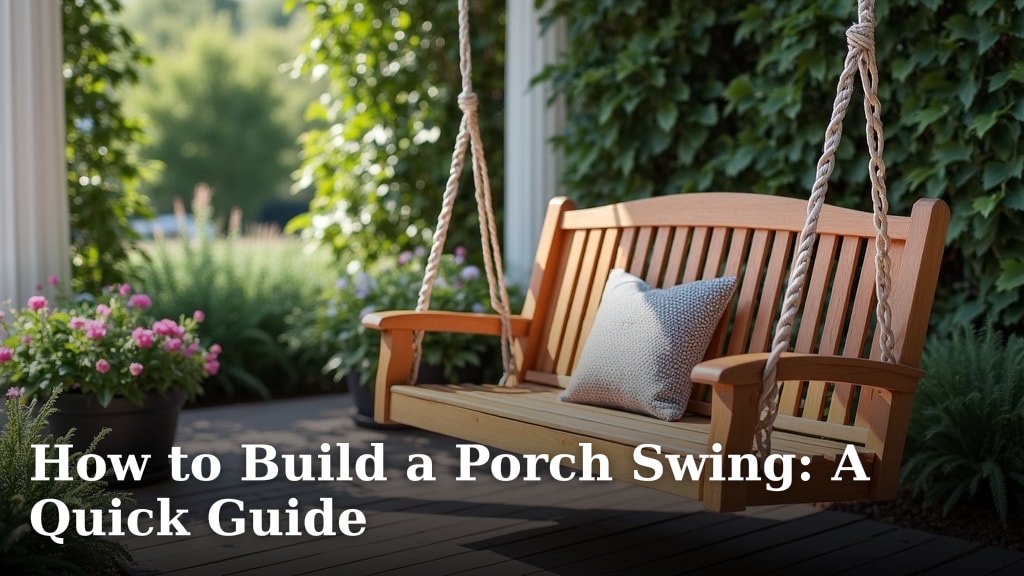
How to Build a Porch Swing: A Quick Guide
Building a Porch Swing: Step-by-Step Instructions
Building a porch swing is a straightforward weekend project that most people with basic tools can complete. You do not need to be a master carpenter to get this done. With the right wood, some planning, and a little patience, you can create a swing that holds up for years. Below, you will find each step laid out clearly so you can follow along without stress.
Gather Your Tools and Materials
Before you cut a single board, make sure you have everything on hand. Running to the hardware store mid-build slows you down and breaks your focus. We found that planning your shopping list ahead of time saves an average of two to three trips during a project like this.
The good news is that most of what you need is affordable and easy to find at any local lumber yard or home improvement store. You are looking at a modest budget of around $50 to $150, depending on the wood you choose (U.S. Department of Agriculture Forest Products Laboratory).
Essential Tools Checklist
Here is a quick checklist of what you should have ready before you begin building your porch swing:
- Circular saw or miter saw for cutting lumber to size
- Drill and drill bits for creating pilot holes and driving screws
- Measuring tape and carpenter’s square for accurate cuts
- Sandpaper (80-grit and 120-grit) for smoothing rough surfaces
- Clamps to hold pieces together while you assemble
- Safety gear including goggles, gloves, and a dust mask
Choosing the Right Wood
Picking the right wood species makes a big difference in how long your swing lasts outdoors. Not all lumber handles rain and sun the same way. Some woods resist rot naturally, while others need more protection from the elements.
Research from the U.S. Forest Products Laboratory shows that cedar, cypress, and teak are among the most durable options for outdoor furniture. Pine is cheaper but may need extra finishing to hold up over time.
| Wood Type | Durability | Cost | Best For |
|---|---|---|---|
| Cedar | High – naturally rot-resistant | Moderate | Humid climates |
| Pine | Medium – needs sealant | Low | Budget projects |
| Teak | Very High – weather-proof | High | Long-term durability |
| Cypress | High – insect-resistant | Moderate | Southern regions |
Measure and Plan Your Design
Now it is time to map out your swing. Grab your measuring tape and check the space where the swing will hang. A standard porch swing is about 4 to 5 feet wide and 2 to 3 feet deep. Make sure your porch can handle the weight.
Next, sketch a simple design on paper. You do not need anything fancy. Just note the
Conclusion
Building your own porch swing is a rewarding project that combines basic tools with smart material choices. You learned how the right wood, like cedar or teak, can save you time on future maintenance. We covered gathering all your supplies first to keep the build smooth. The key is careful planning and measuring before you make your cuts. Now, you have a clear path from lumber to a finished swing ready for relaxing afternoons. Your best next step is to grab your measuring tape and sketch out your design today.
Frequently Asked Questions
How much weight can a DIY porch swing hold?
A standard 4-foot swing built with two-by-four pine boards and proper hardware can typically support 400 to 600 pounds. The real limit comes down to the strength of your ceiling joists and the hanging hardware you use. Always check the weight rating on your chains and eye bolts for the safest estimate.
What is the most important tool for this project?
A reliable drill is arguably the most critical tool you will use. You need it for creating pilot holes to prevent wood splitting and for driving all the screws that hold your swing together. A good measuring tape is a close second, as accuracy in the planning stage prevents major headaches later.
Can I use pressure-treated pine for a porch swing?
You can, but there are important considerations. Pressure-treated wood is affordable and rot-resistant, but it contains chemicals that make it wet initially. You must let it dry completely for several weeks before applying a finish, and you should wear gloves when handling it.
Do I need to seal or stain the wood?
Yes, for most woods this is a necessary step. Even naturally durable woods like cedar benefit from a UV-protective sealant to prevent graying. Pine absolutely requires a good exterior stain or paint to protect it from moisture and prevent warping over time.
How do I safely hang the swing from my porch ceiling?
You must anchor into the structural ceiling joists, not just the porch roof decking. Use heavy-duty lag screws or through-bolts with large washers to distribute the weight. For added safety, consider using a porch swing hanging kit rated for at least twice the weight of your swing.