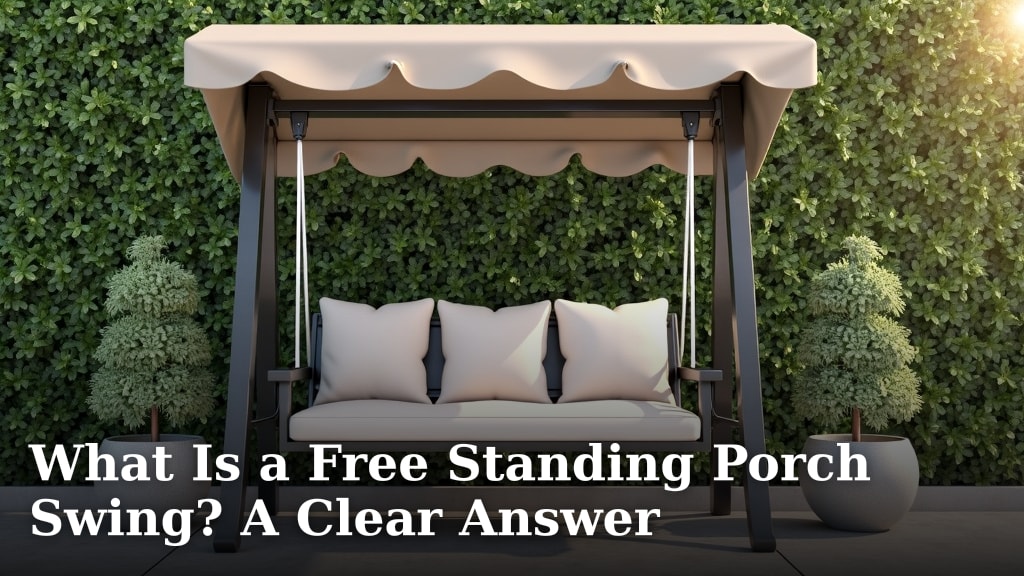
What Is a Free Standing Porch Swing? A Clear Answer
Defining a Free-Standing Porch Swing
A free-standing porch swing is a type of outdoor swing that sits on its own frame, completely independent of any house, deck, or wall. Think of it like a piece of furniture you can place anywhere in your yard, on your patio, or on a porch without needing to drill into your home.
It’s the most flexible and low-hassle way to add a relaxing swing to your outdoor space. You get all the gentle rocking motion without the commitment of permanent installation.
How It Differs from Traditional Attached Swings
The main difference is obvious once you see it. A standard porch swing hangs from chains or ropes bolted to a beam or ceiling. A free-standing model has its own built-in support structure. This is usually an A-frame or canopy frame.
This design means you aren’t limited to where your porch beams are. You also avoid the risk of damaging your home’s structure if installation isn’t done perfectly. Many experts note that free-standing options are ideal for renters or anyone who wants to rearrange their outdoor layout easily (Home and Garden Research).
The Basic Components
Every free-standing porch swing has two main parts. First, the swing seat itself, which holds one or more people. Second, the support frame that suspends the seat with chains, ropes, or springs. The frame is what makes it portable and self-contained.
Why Choose a Free-Standing Swing?
You might be wondering if a free-standing model is the right choice for you. We found that most shoppers prioritize three main benefits: simplicity, flexibility, and safety. It’s a straightforward way to upgrade your backyard comfort.
Ultimate Portability and Flexibility
Imagine wanting your swing in the sun one afternoon and in the shade the next. With a free-standing swing, you can simply move it. There’s no heavy hardware anchoring it to a single spot. This flexibility is a huge advantage for changing seasons or different outdoor activities.
You can also move it indoors to a sunroom or enclosed porch during harsh winter months. This isn’t an option with permanently attached swings.
No Installation Hassle or Damage
You don’t need a drill, a ladder, or a handy friend to set it up. Most arrive in a box and require simple assembly of the frame. You avoid the potentially damaging process of drilling into your home’s support beams, which is a major relief for homeowners concerned about structural integrity or leaks.
According to the American Society of Home Inspectors, improper installation of hanging fixtures can sometimes lead to wood rot or structural stress over time. Free-standing swings bypass this concern entirely.
Style and Design Versatility
These swings come in a vast array of styles. From classic wooden garden swings to modern metal gliders with canopies, there’s a design for every taste. They act as a focal point in your landscaping, adding a pop of color or a touch of charm wherever you place them.
Common Materials and Their Pros & Cons
The material of your swing determines its look, feel, and how much care it will need. Choosing the right one depends on your climate, style preference, and how much maintenance you’re willing to do.
| Material | Pros | Cons / Considerations |
|---|---|---|
| Wood (Cedar, Pine, Teak) | Natural look, durable if maintained, ages nicely. | Requires regular sealing/staining, can splinter if weathered, heavier. |
| Metal (Steel, Aluminum) | Very sturdy, often more affordable, modern aesthetic. | Can get hot in direct sun, may rust if finish is damaged, often needs cushions. |
| Recycled Plastic / Composite | Extremely low maintenance, weather-resistant, won’t rot or splinter. | Can look less natural, may not have same weight capacity as solid wood, color can fade. |
The Case for Weather-Resistant Finishes
No matter the material, look for a high-quality protective finish. For wood, this means a sealant or exterior-grade paint. For metal, it’s a powder-coated or galvanized finish. This simple step is the best defense against rain, sun, and humidity, and it dramatically extends your swing’s life.
Key Factors to Consider Before You Buy
Before you click “buy,” take a moment to measure and think. We found that a little planning prevents big headaches. The perfect swing for your neighbor might not be right for your space.
Space and Weight Capacity
You need enough room for the swing to move freely without hitting furniture or walls. Leave at least two to three feet of clearance in front and behind the swing. Check the weight capacity, which can range from 400 to over 1,000 pounds. Make sure it comfortably fits everyone who will use it.
Comfort is King
A swing is for relaxing. Test the seat depth and angle if possible. A seat that is too shallow can feel unstable. Consider the back support—is it high enough? Many swings come with or without cushions, so you can decide if you want that extra layer of comfort or prefer the simplicity of the hard seat.
Where Will It Live?
If the swing will be in a sunny spot, a canopy top is a fantastic feature for shade. If your area gets a lot of rain, look for water-resistant cushions and a frame that promotes drainage. This foresight ensures you’ll use it more often.
Your Free-Standing Porch Swing Buying Checklist
Use this quick list to guide your decision. It covers the essentials for a smart, satisfying purchase.
- Measure First: Know your available space, including height and clearance.
- Check Capacity: Confirm the weight limit suits your household.
- Choose Material Wisely: Match the material to your maintenance tolerance and climate.
- Look for Durability: Prioritize strong frames (like powder-coated steel or solid wood) and quality hardware.
- Consider Extras: Do you want a canopy, cushions, or a built-in table?
- Read Assembly Reviews: See what other buyers say about the setup process.
Care and Maintenance Tips
Want your swing to last for years? A little care goes a long way. We found that regular, simple upkeep is the best approach.
For wood swings, inspect the finish annually. Reapply sealant or stain every one to two years depending on your climate. Tighten any bolts or screws that have loosened from use. For metal swings, wipe the frame down with a mild soapy solution to prevent grime buildup. Check for any chips in the paint and touch them up to prevent rust.
Cushions should be stored indoors during off-seasons or long periods of non-use. This simple habit prevents mildew and sun fading.
Safety Considerations for Everyday Use
Your family’s safety is the top priority. We all know the simple rules—don’t stand up in a swing, don’t overload it. But there are a few other things to keep in mind.
Always place your swing on a stable, level surface. Uneven ground can cause the frame to rock dangerously. If your swing has a canopy, be sure to anchor it securely in windy conditions. Most canopies are designed to be removed; take it off during storms.
Regularly inspect the chains, ropes, or springs for any signs of fraying or wear. If something looks worn, it’s time to replace it before using the swing again. Following these guidelines, based on common sense and outdoor furniture safety standards, ensures your swing remains a safe haven for relaxation.
Conclusion
A free-standing porch swing is a practical, flexible way to add comfort to your outdoor space. You’ve learned that it stands on its own frame, offers easy portability, and requires no installation that could damage your home. We covered the key materials, from wood to metal to composite, and the essential factors like space, weight capacity, and weather resistance. With the right care and safety checks, your swing can provide years of enjoyment. So, take the next step: use our buying checklist to measure your space and choose a swing that fits your needs perfectly.